
After two full nights on the houseboat in Cagliari’s marina, I woke up on Day 24 feeling like myself again. It’s strange how quickly a body can recover once you actually let it — two nights of proper sleep, laundry done, batteries recharged both literally and figuratively. Twenty-four days on the road now, several thousand kilometers already behind me, and for the first time in a few days I felt genuinely ready to point the front wheel toward home again. Not that I was in a rush. Home was still a long way off, and there was a lot of Sardinia left to see before I’d even think about a ferry back to the mainland.
The plan for the next two days was simple on paper: work my way north through Sardinia, and from the northern tip, catch a ferry across to Corsica. Simple on paper, at least. Sardinia has a way of making even the shortest-looking route on the map turn into an entire day of switchbacks, coastal detours, and unplanned stops. I’d learned that much already over the past few days here, and I wasn’t about to complain about it. If anything, it’s exactly the kind of unpredictability that makes a trip like this worth doing in the first place.
I loaded up the bike one more time, checked the straps on the panniers out of habit more than necessity, and rolled slowly out of the marina past the other houseboats still asleep in the morning light. There’s a particular kind of quiet in a marina before the day really gets going — just the creak of ropes against the docks and the occasional gull. It felt like a fitting way to say goodbye to Cagliari after two days of genuinely needed rest.
East First, Because That’s Where the Good Stuff Is
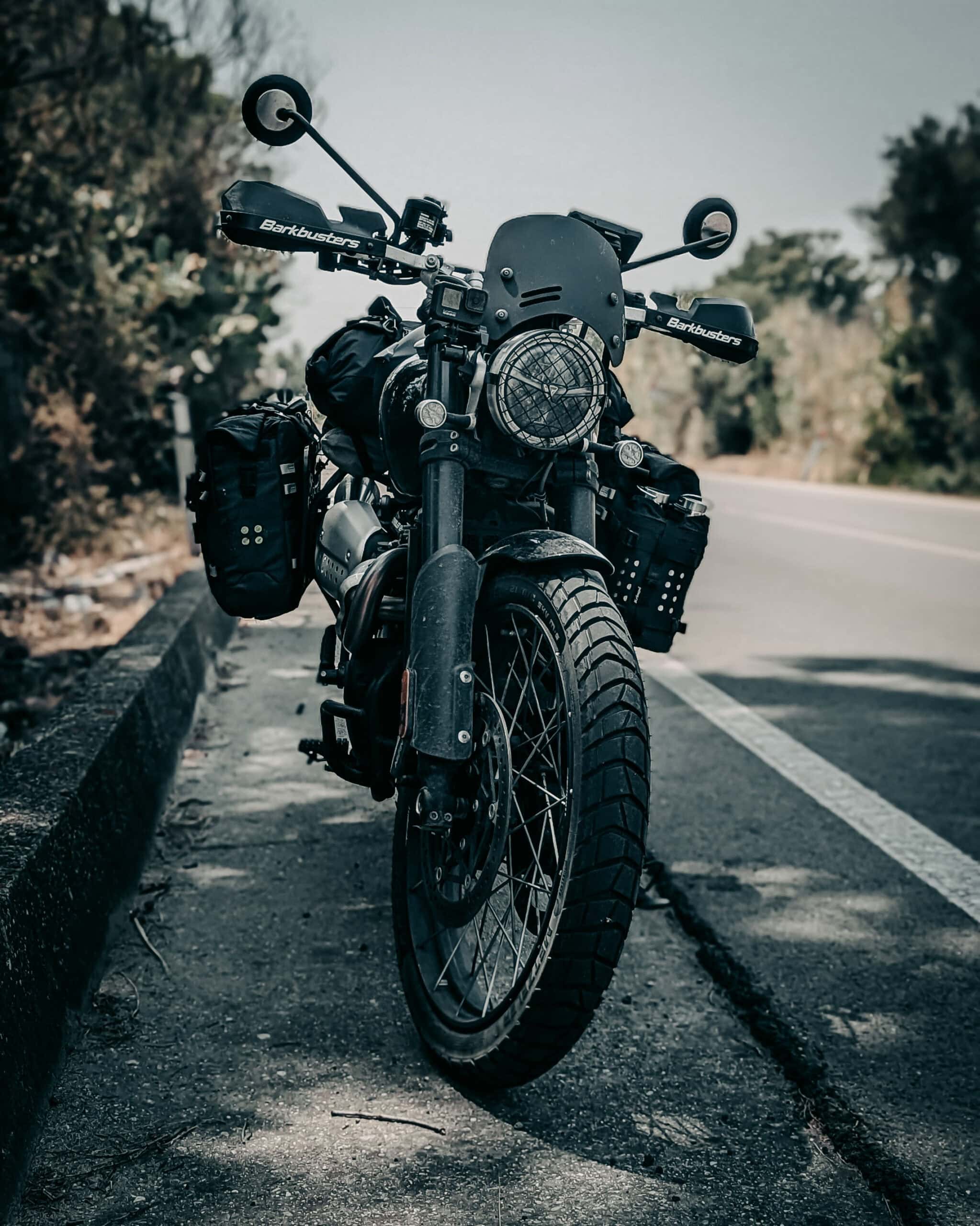
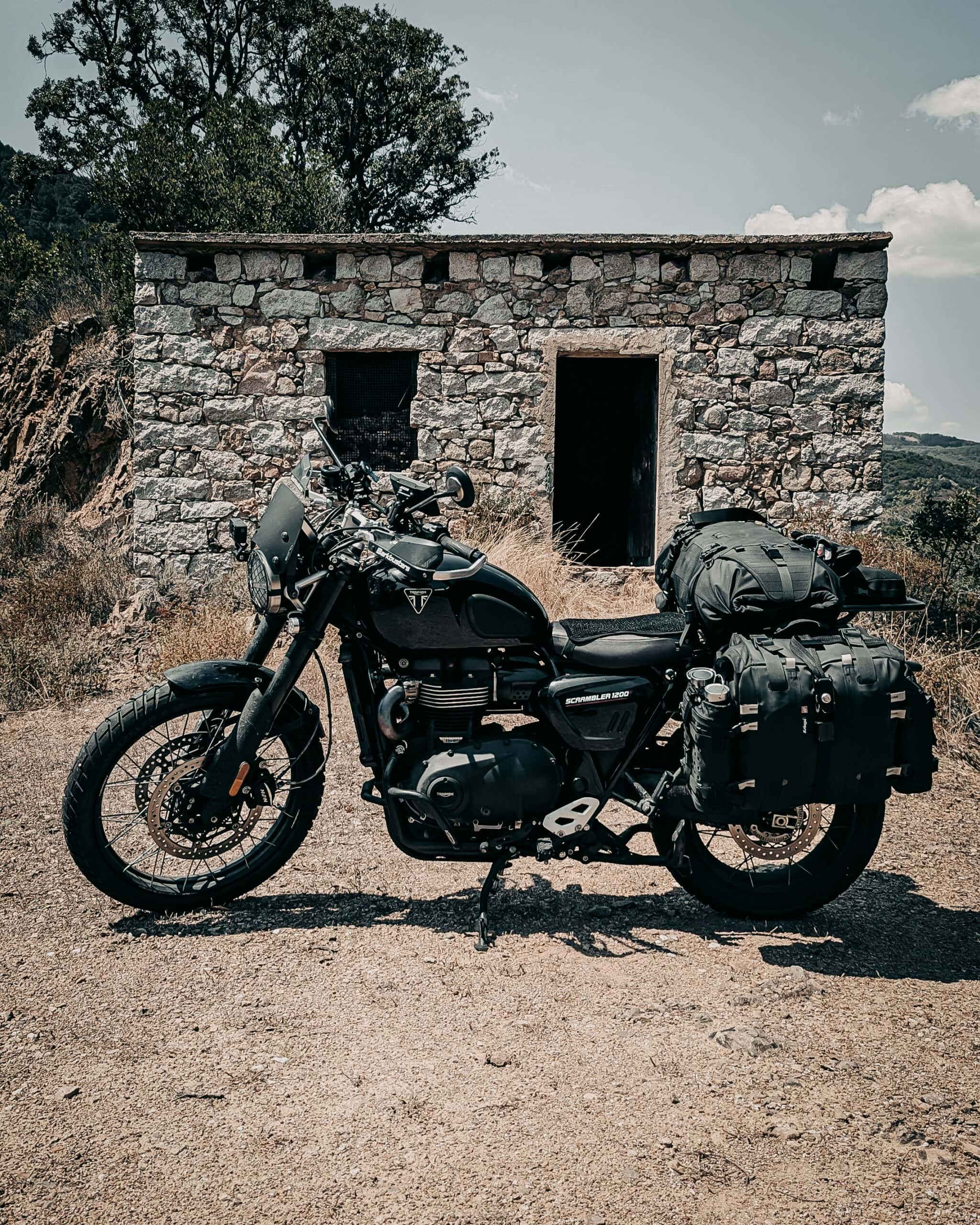
I packed up the houseboat, said a mental thank-you to the little floating room that had been my base for two nights, and pointed the bike east first. Instead of heading straight north — which would have been the more direct route toward the coast I needed to reach — I decided the detour was worth it. Sardinia’s east coast has a reputation, and not just among tourists. Among motorcyclists, this island is something of a legend. Empty roads, dramatic elevation changes, coastline that looks like it was designed specifically to be ridden rather than just looked at. I wasn’t going to skip that on a technicality of geography, not when I had the time to spare.
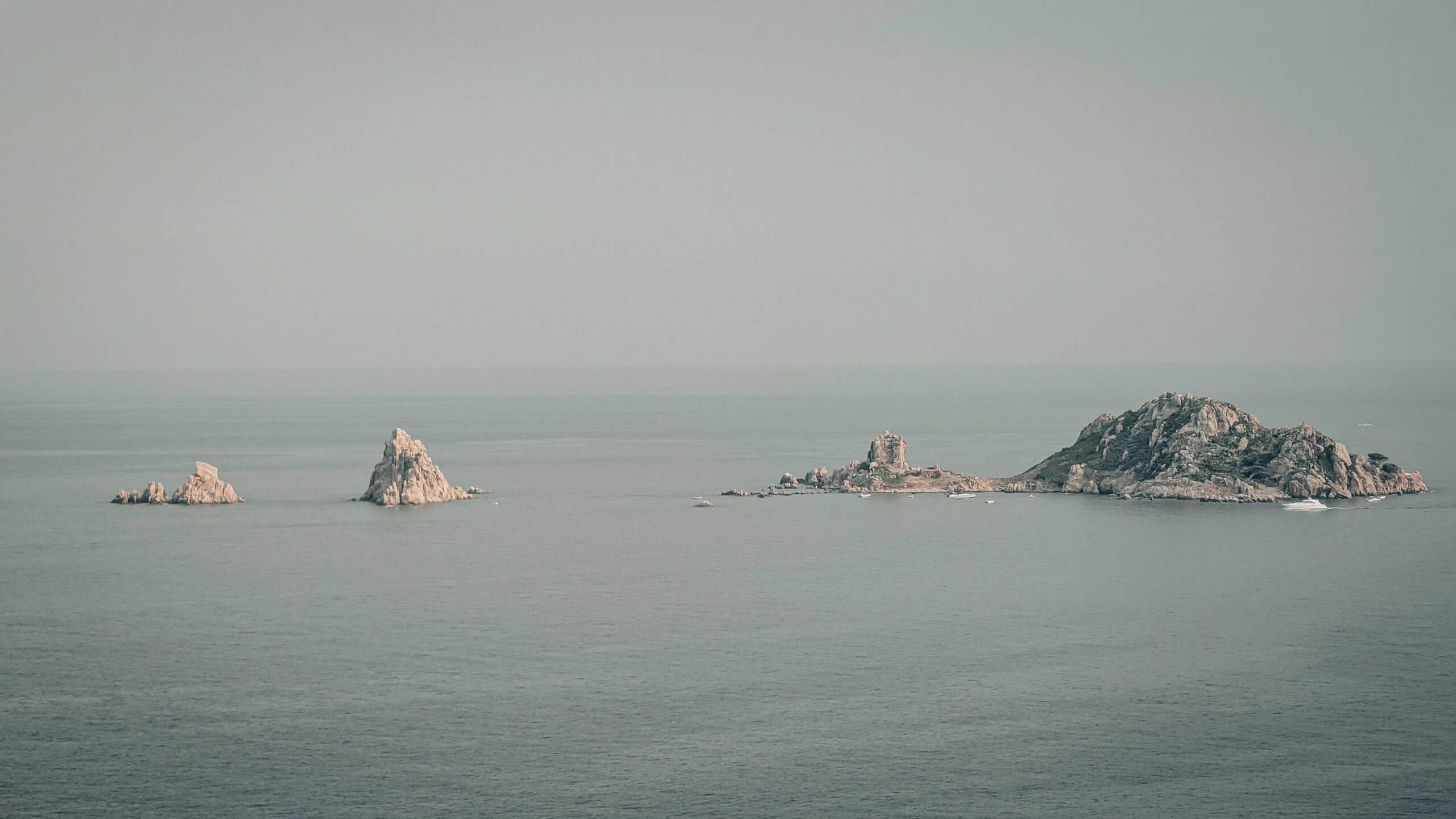
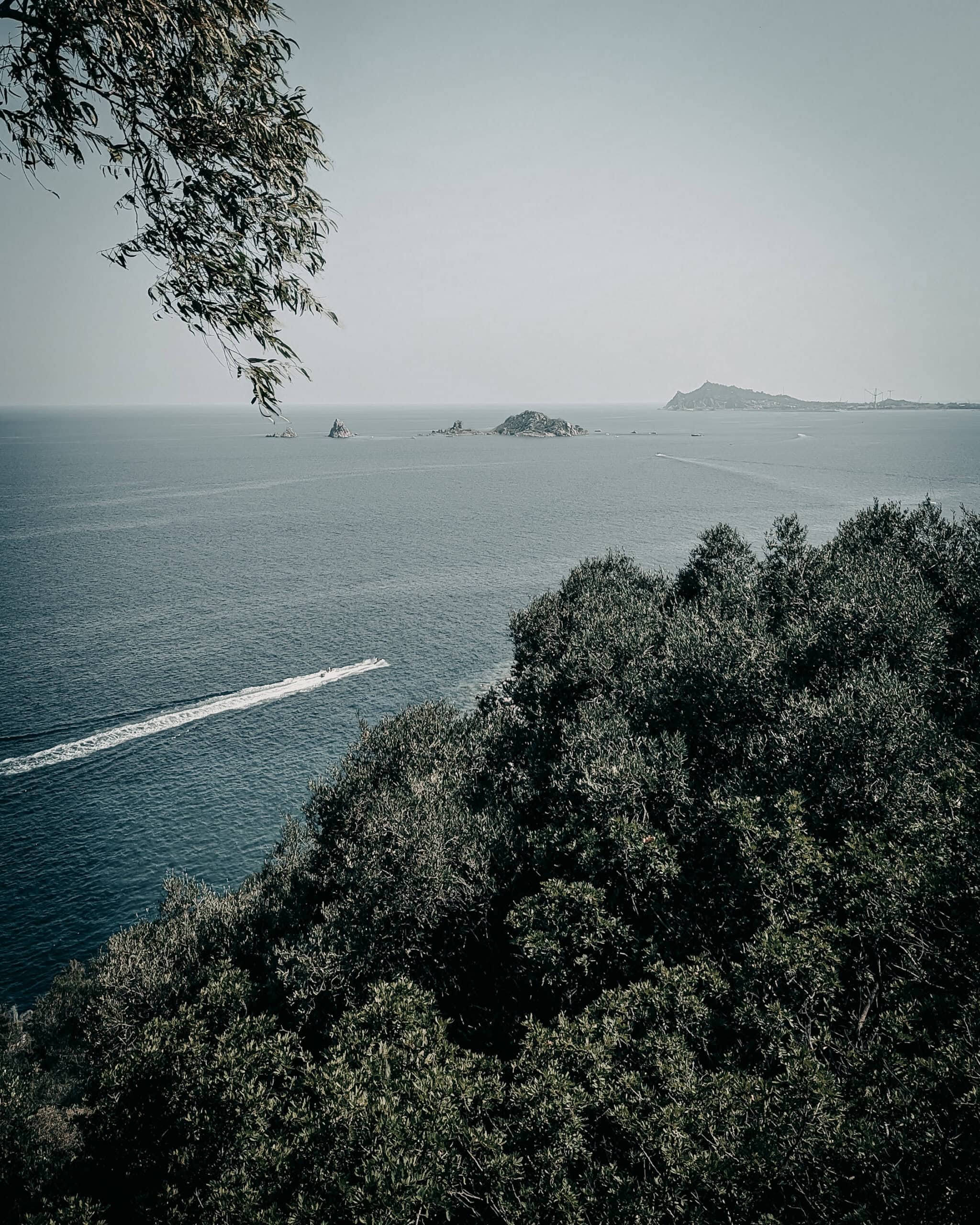
The first proper stop came at a viewpoint along the coast, somewhere in the direction of Villasimius. I pulled over where the road curved along a cliff, cut the engine, and just stood there for a minute. Below me, a scattering of small rock islands broke up the surface of the sea — some barely more than jagged spikes of stone poking out of the water, others large enough to carry a bit of scrub vegetation on top. A couple of small boats were cutting white lines across the otherwise flat, hazy blue water, their wakes slowly dissolving behind them. It’s the kind of view that photographs never quite do justice to, because what a photo can’t capture is the smell of salt and dry pine, or the particular quality of heat that sits on your skin when you’re standing still after an hour of riding.
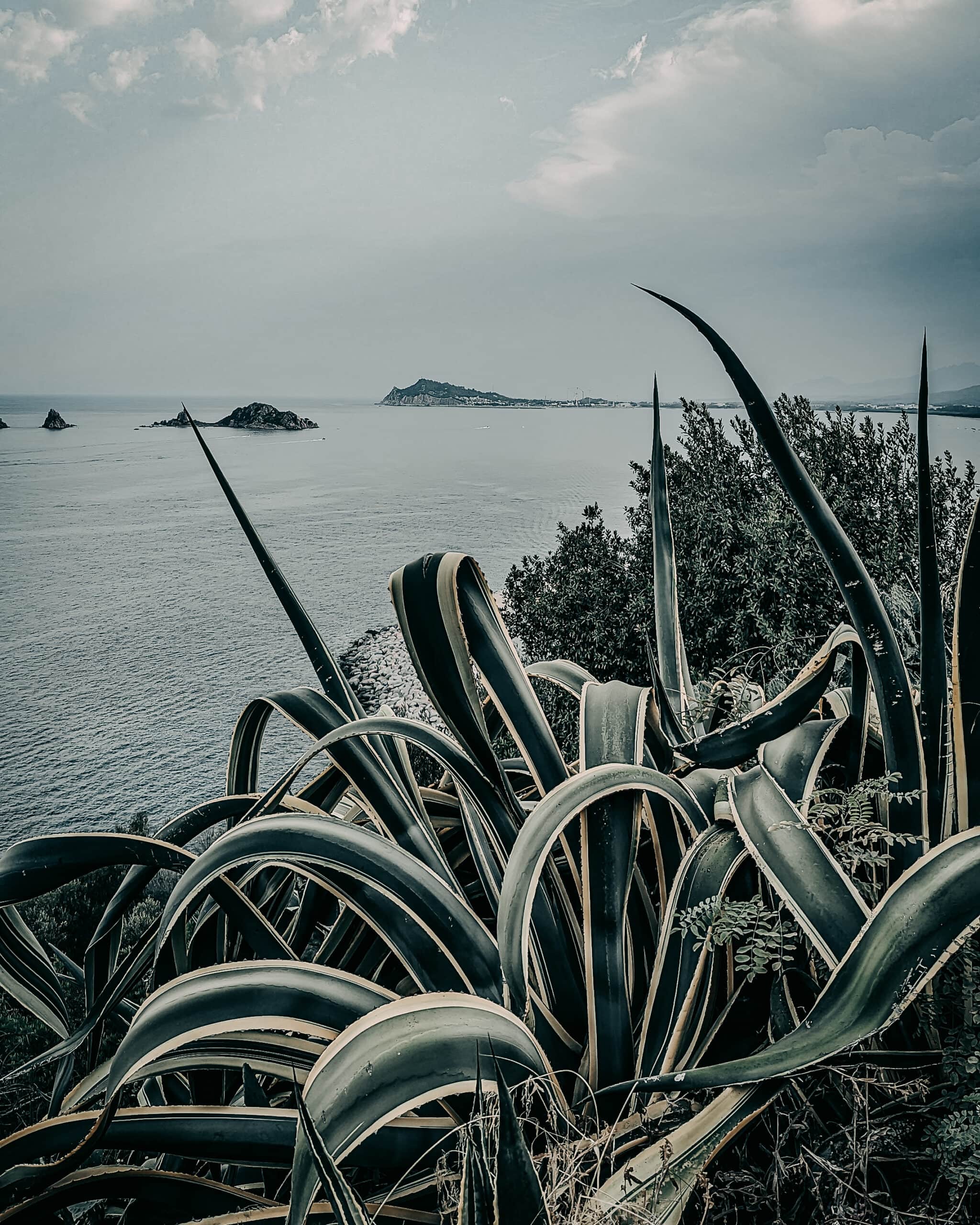
I found a second spot a bit further along, half-hidden behind a wall of agave plants growing wild right at the edge of the cliff. Their long, spiked leaves framed the same rocky islands from a slightly different angle, with the water below shifting from deep navy near the shore to a pale, almost milky blue further out toward the horizon. I don’t know exactly what these little islands are called — there seem to be several clusters of them along this stretch of coast, and half of them probably don’t even have names on a map — but they gave the whole morning a strange, almost prehistoric feeling. Sardinia is famous for its beaches, obviously, and rightly so, but these quiet, half-forgotten viewpoints along the road are just as much a part of what makes this coastline special. Nobody else stopped at either spot the entire time I was there.
Into the Seven Brothers
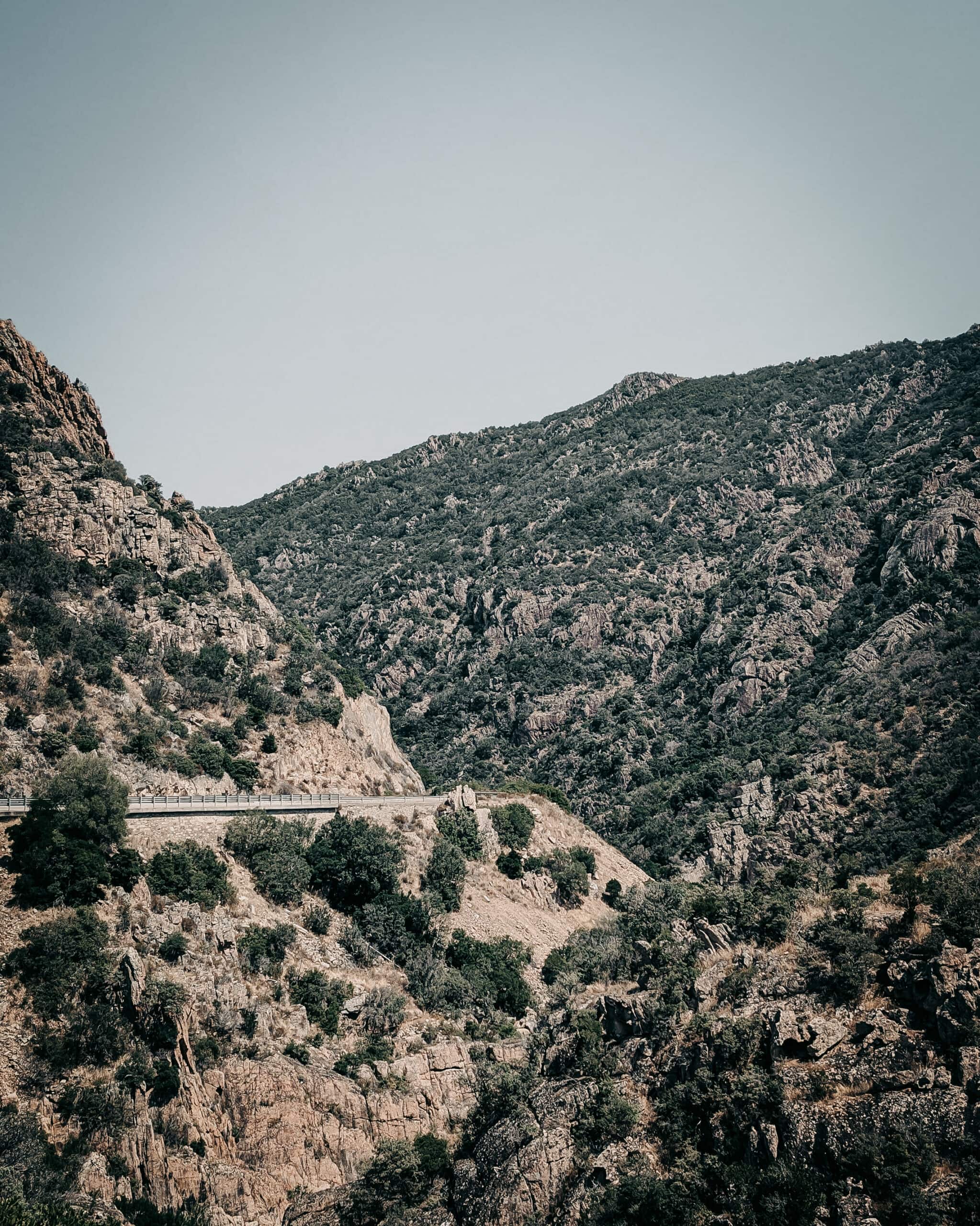
From the coast, I turned inland and north, and that’s when the day really changed character. I’d picked a route that ran through the Parco Naturale dei Sette Fratelli — the Seven Brothers Natural Park — named after a chain of seven granite peaks that dominate the interior of this part of the island. I hadn’t researched much about it beforehand; I just saw on the map that a state road cut straight through the middle of it, and that was reason enough to point the bike that way.
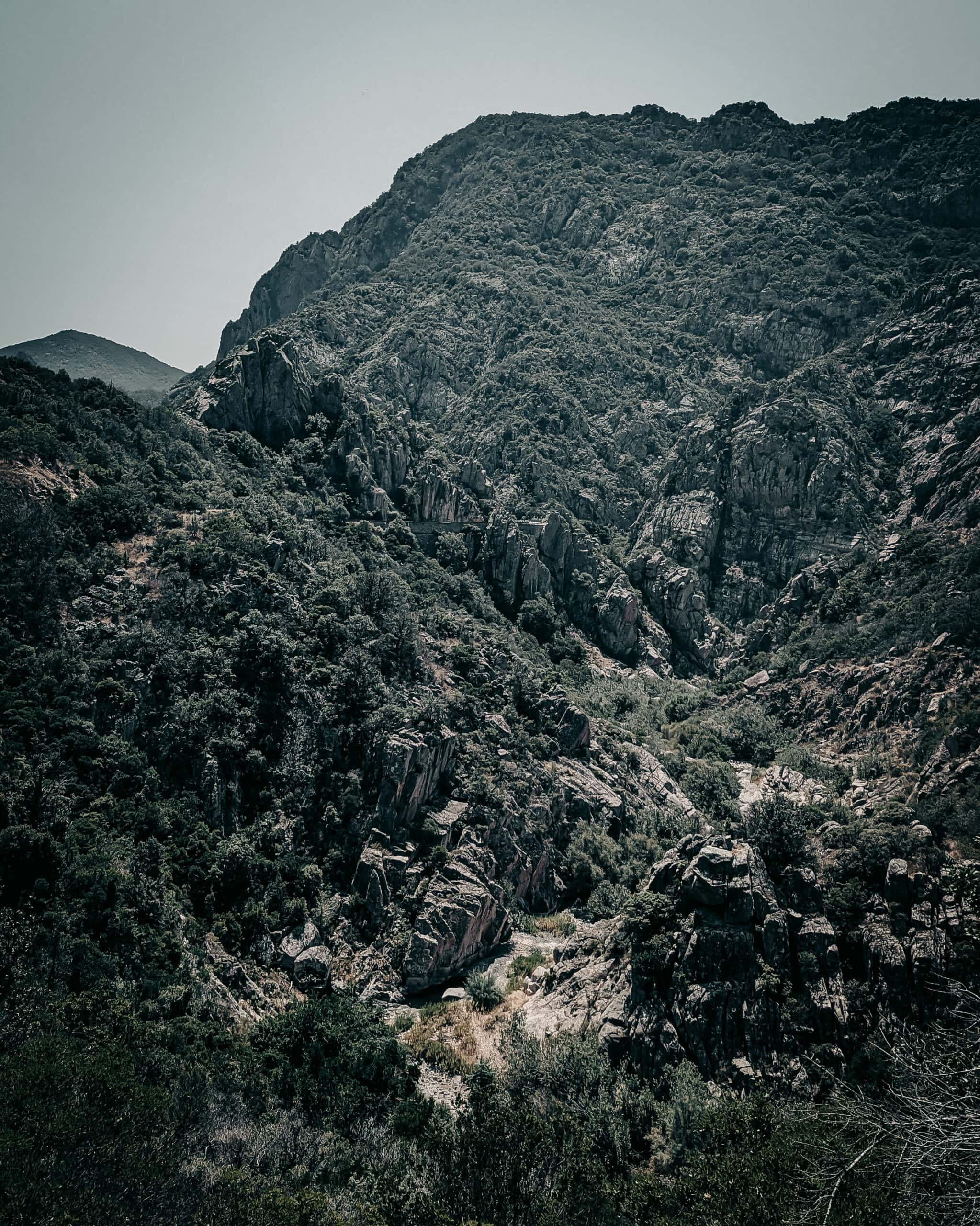
It turned out to be one of the more memorable stretches of road on this entire trip. The landscape kept switching back and forth between bare granite rock faces and dry, steppe-like scrubland, with almost no trees tall enough to offer any real shade. It’s rugged terrain, the kind that looks like it hasn’t changed much in centuries. Every so often the road would snake around the shoulder of a hill and reveal another valley stretching out below, empty except for rock and low bushes baking in the heat. A crash barrier here and there was the only real sign that anyone had ever built anything permanent through this landscape at all.
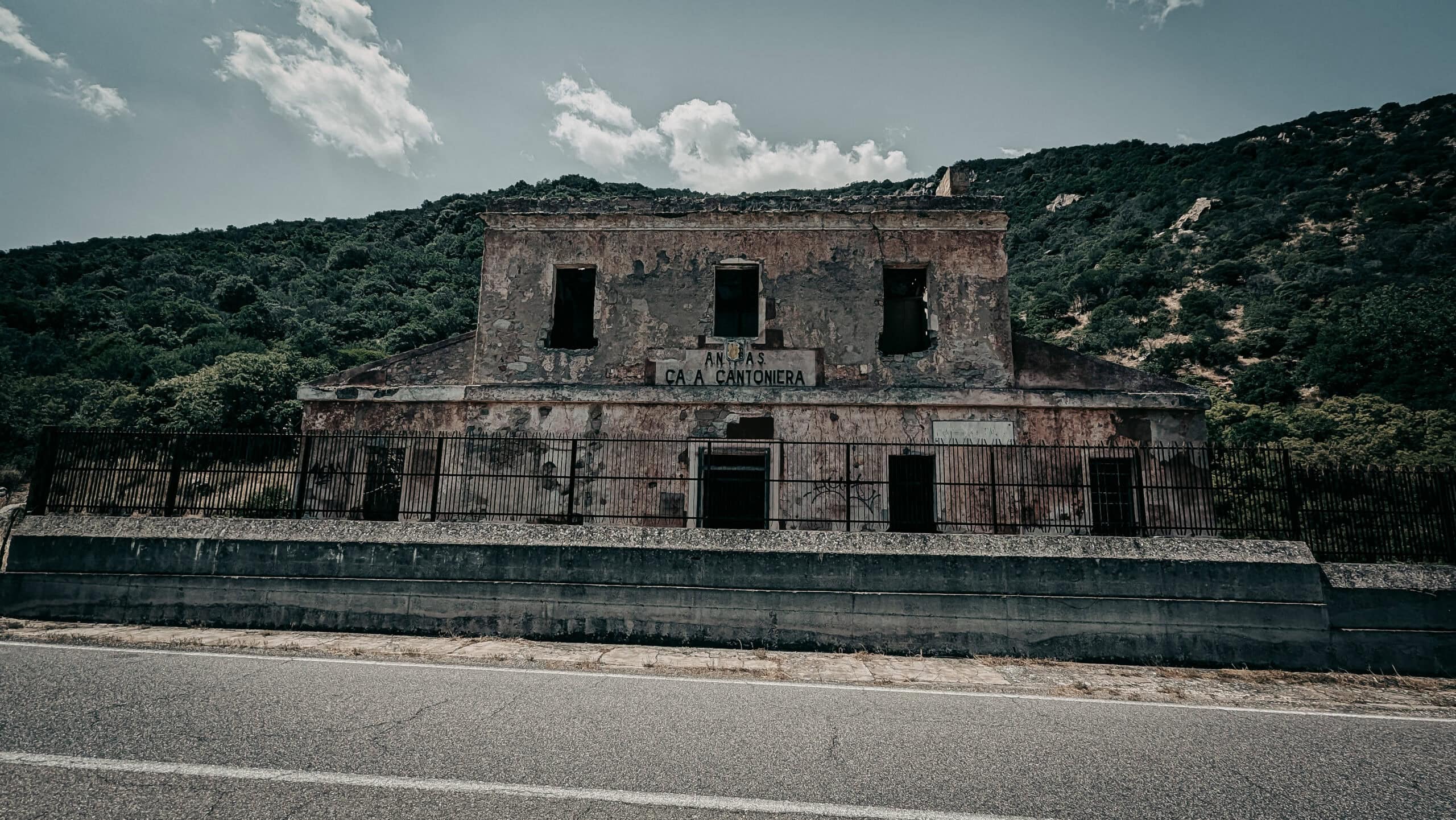
What struck me most was how abandoned parts of it felt. Scattered along the roadside were the remains of old buildings — half-collapsed stone structures, roofless walls, the occasional larger ruin that must once have served some purpose related to the road itself. One of them, a two-story stone building with a barred iron fence around it and the faded lettering “ANAS – Casa Cantoniera” still legible on the facade, sat right at a bend in the road, its windows long since empty, its walls streaked and crumbling under decades of sun. These “casa cantoniera” buildings, I later learned, used to house the road maintenance workers who looked after Italy’s state roads before modern machinery made that kind of permanent roadside presence unnecessary. Now they just stand there, slowly dissolving back into the landscape, silent witnesses to a completely different way of maintaining a road network, half-swallowed by the green hillside behind them.
It was brutally hot through this section — no wind to speak of, the sun sitting directly overhead, and barely a scrap of vegetation tall enough to block it. But that heat, combined with the almost complete absence of other traffic, gave the whole ride a strange, meditative quality. I think I passed maybe four or five other vehicles in over an hour of riding through the park. For someone who spends most of his life navigating actual traffic, that kind of emptiness is its own kind of luxury. This was exactly the sort of road I’d hoped to find in Sardinia — technical enough to stay interesting, remote enough to feel like a real adventure, and completely free of the tourist congestion you get closer to the coast. I stopped a couple of times just to sit on the bike in the silence and listen to the engine ticking as it cooled, with nothing else around for kilometers in any direction.
An Old Crane and a Bit of Gravel
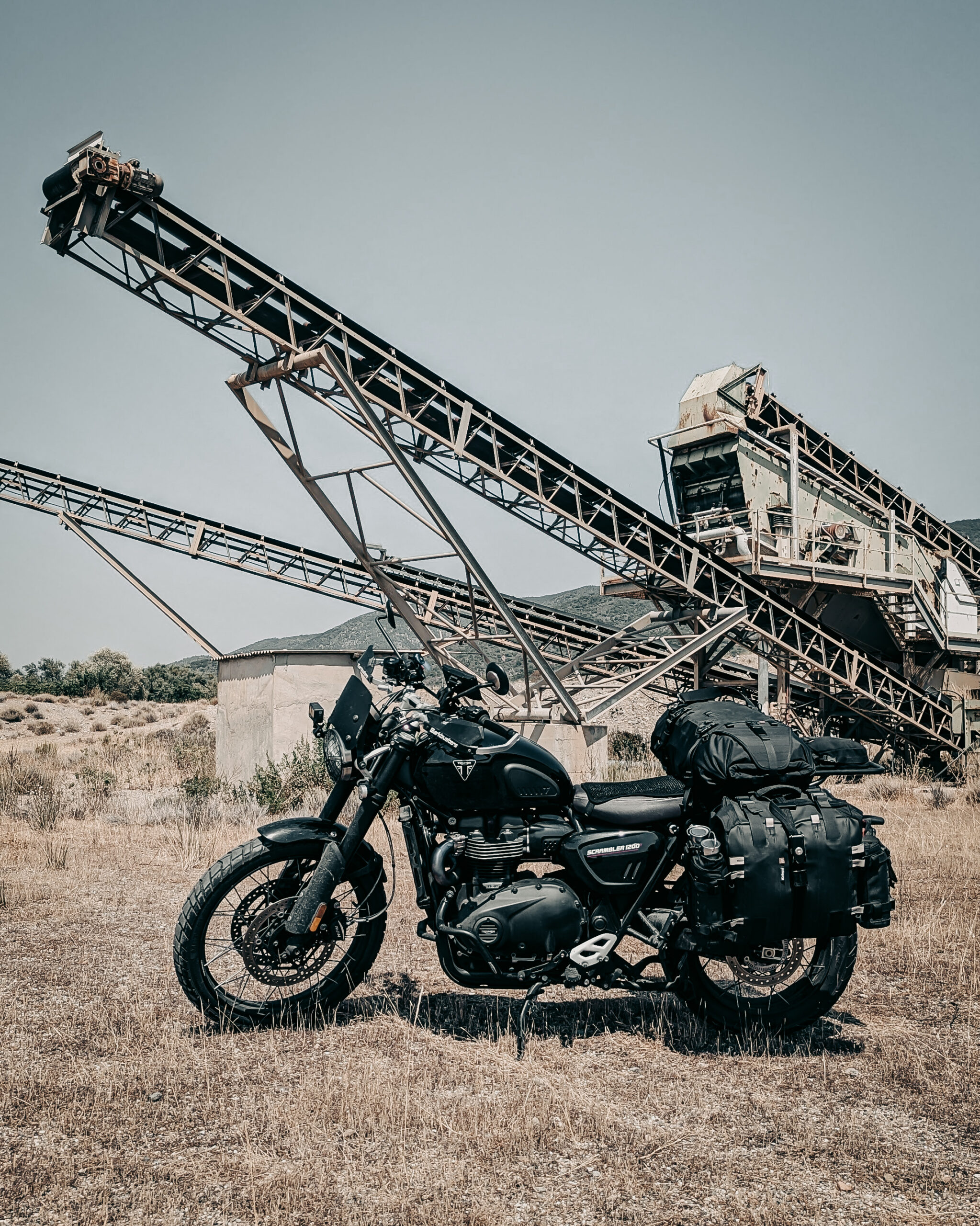
Not every stop on Day 24 was quite so dramatic, but they were no less interesting to me. At one point along the route east of the park, I spotted an old industrial structure just off the road — a rusted conveyor system with two long, angled arms reaching up into the sky, clearly part of an abandoned quarry or gravel-processing operation that must have closed down years ago. I couldn’t resist pulling the bike over into the dry grass in front of it for a photo. There’s something about these forgotten pieces of industrial infrastructure that I find genuinely fascinating — half machine, half sculpture, left to rust in a landscape that doesn’t seem to mind their company at all. The rest of the plant sat quietly in the background, corrugated metal walls faded to a pale rust-orange, weeds growing up through the gravel where trucks must once have driven daily.
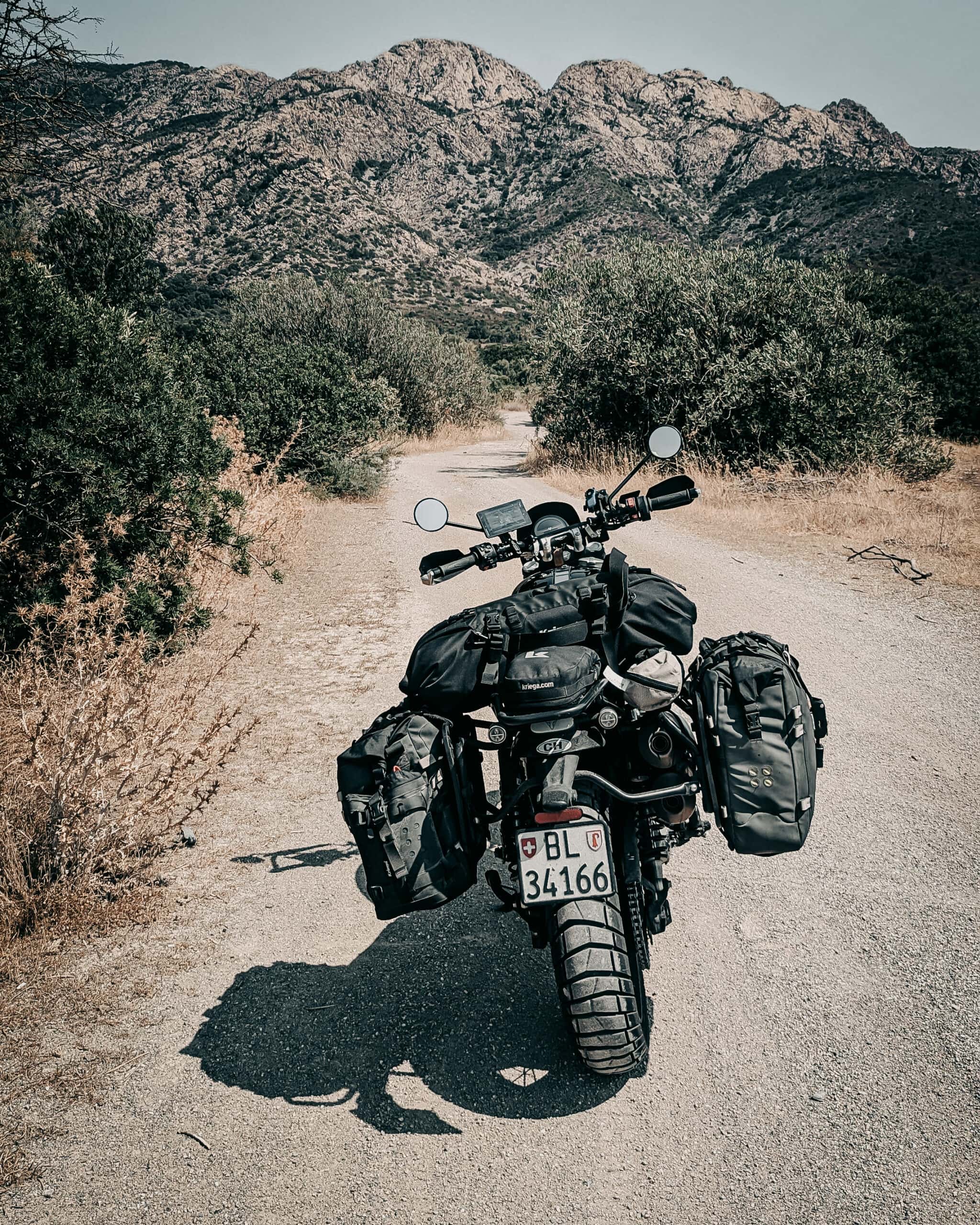
Further along, the paved road gave way to a stretch of unpaved gravel track, cutting through a corridor of olive trees and dry brush. I’ll admit I hesitated for a second when the tarmac ended — you never quite know what kind of surface you’re going to find on these Sardinian back roads, and I’ve heard enough stories about deep sand or loose rock catching riders off guard — but it turned out to be perfectly manageable. Loose in places, a bit dusty, but nothing the Scrambler couldn’t handle without any drama. If anything, it was a nice change of rhythm from the winding mountain tarmac: a straight, dusty track running between hedges of green, with the jagged silhouette of the Seven Brothers peaks rising up in the distance behind me. I stopped for a moment just to take it in — bike loaded up, dust settling on the panniers, mountains framed perfectly in the gap between the trees.
North Along the Coast to Santa Maria Navarese
From there, I worked my way back toward the coast and continued north with only a handful of short stops. The goal for the day was a small place near Santa Maria Navarese, a little village right on the water further up the east coast, roughly on the way toward the northern part of the island. I’d found a small accommodation there on Booking a few days earlier, nothing fancy, but exactly what I needed after a long day of riding through heat and dust: a quiet room, a shower, and — as it turned out — a genuinely good restaurant just next door.
The ride up the coast in the afternoon light was one of those stretches where you stop thinking about the destination altogether and just settle into the rhythm of the road. Long curves following the contour of the coastline, occasional glimpses of the sea between the hills, the temperature slowly starting to drop as the sun sank lower toward the water. By the time I rolled into the little settlement near Santa Maria Navarese, I was tired in the good way — the kind of tired that comes from a long day spent doing exactly what you wanted to be doing, not the exhausted kind that comes from fighting traffic or bad roads.
A Restaurant Worth Reserving
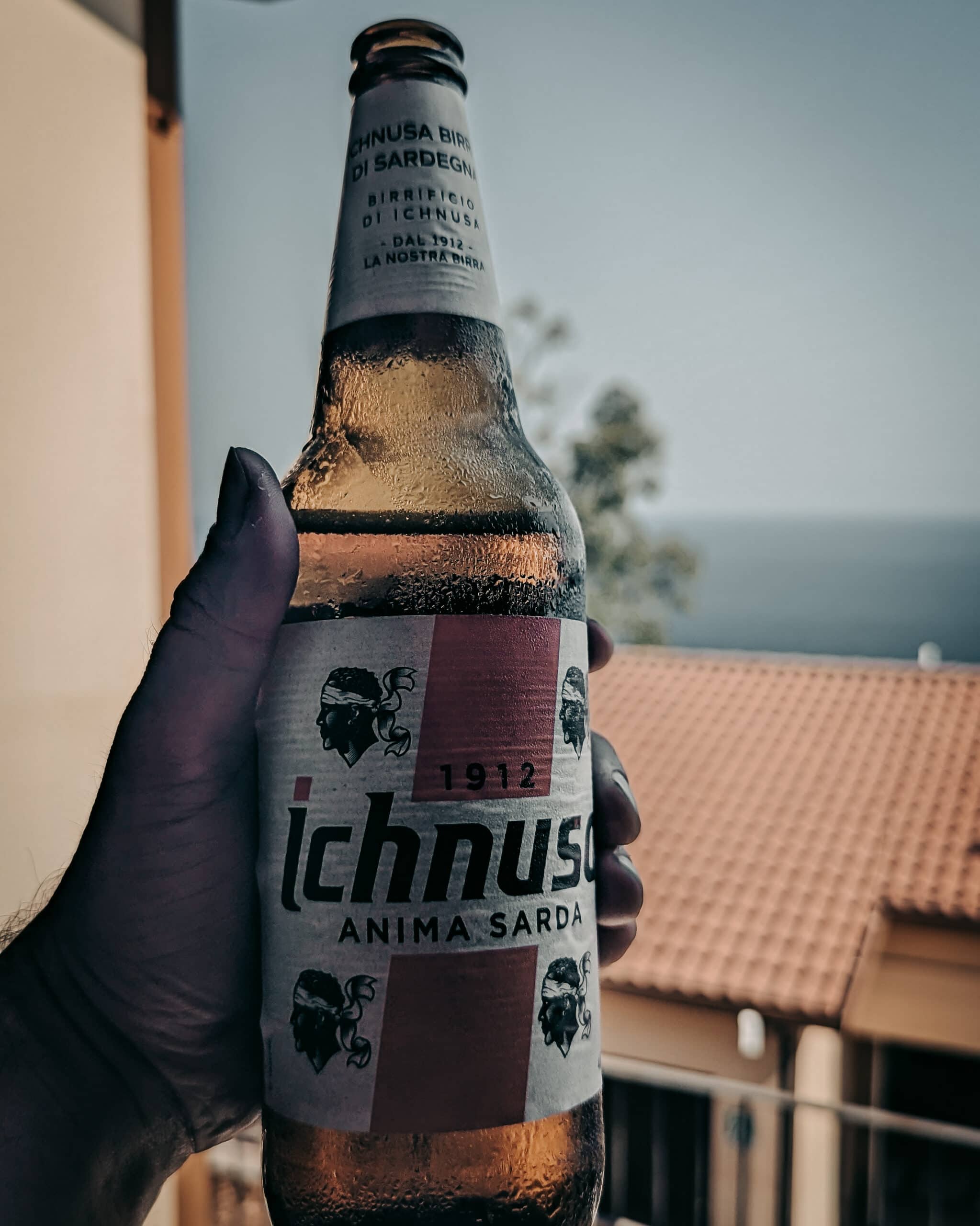
I checked into the accommodation, got the bike parked and unloaded, and cleaned myself up from a day’s worth of dust and sweat. Right next door was a small restaurant, directly on the coast, the kind of place with a handful of tables outside and a view that made up for anything the menu might have lacked. I ended up having a relaxed, genuinely enjoyable dinner there in the evening — nothing complicated, just good food and a cold Ichnusa beer to close out the day, the bottle sweating in the warm evening air with the rooftops of the village and the sea stretching out somewhere behind it.
One thing worth mentioning for anyone thinking of doing something similar: reservations matter here, more than you might expect for such a small place. I got lucky that evening simply because I asked early, but I noticed that the better restaurants along this stretch of coast were fully booked out well in advance — apparently a common pattern in Sardinia during the high season, when the island’s population seems to multiply overnight with visitors chasing exactly the same coastline I’d been riding through all day. A short walk around the village after dinner confirmed as much: nearly every terrace I passed was full, with disappointed-looking groups occasionally standing outside restaurants that had no free tables left, checking their phones for anywhere else that might still be open. Lesson noted for the rest of the trip up the coast.
Looking back on the day as I sat there finishing my beer, it struck me how much variety had been packed into these last few hundred kilometers — rocky sea stacks and agave-lined cliffs in the morning, the raw, sun-baked wilderness of the Seven Brothers around midday, an abandoned quarry and a stretch of dusty gravel in the early afternoon, and now this quiet little coastal village in the evening light. That’s the thing about Sardinia that keeps surprising me: it never seems to settle into just one kind of landscape for very long. Every hour on the bike seems to bring a slightly different version of the island, as if it’s compressing an entire country’s worth of scenery into one relatively small piece of coastline.
I thought a bit, too, about how differently this stretch of the trip feels compared to the first couple of weeks. Back then, every day was still about discovery in a very outward sense — new countries, new borders, new languages on the road signs. Sardinia feels different. It’s still Italy, technically, but it doesn’t really feel like the mainland at all; it has its own rhythm, its own light, its own way of being remote even when you’re only a couple of hours from a major port city. Days like this one, with long empty roads and almost no plan beyond “keep heading toward the coast, then north,” are exactly the kind of riding I set out looking for when I planned this whole trip. No itinerary to rush through, no boxes to tick — just the road, the heat, and whatever happens to be around the next bend.
Tomorrow the plan is to keep pushing north, further up this coast and eventually across toward the northern tip of the island, from where a ferry will carry me and the bike over to Corsica. Twenty-four days in, thousands of kilometers logged, and still plenty of road left before this trip is anywhere near done. For tonight, though, it was enough just to sit by the water, finish the beer, and let the day settle in.