
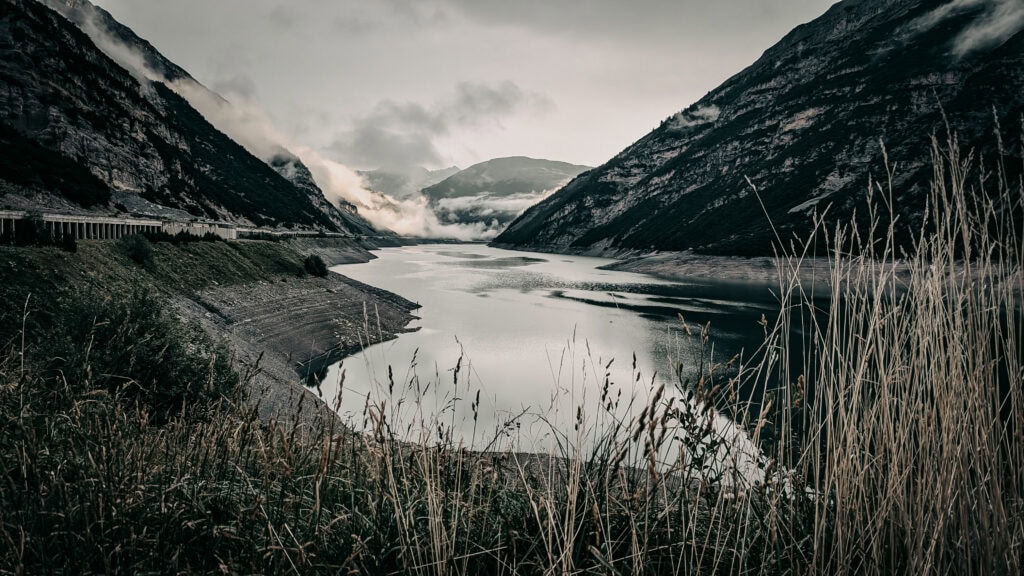
A Restless Night Wild Camping by Lago di Livigno
There’s a particular kind of silence that settles over a lake at three in the morning, the kind that feels less like peace and more like a held breath. I know that silence now, because I spent a good part of last night listening to it, lying awake in my tent on the shore of Lago di Livigno, waiting to see if it would break.
It’s funny how differently you experience wild camping depending on what you’re traveling with. I’ve spent time on the road in a van before, and there’s something about four steel walls and a locking door that lets your brain switch off at night. A tent pitched next to a motorcycle is an entirely different proposition. You’re not hidden behind anything. You’re not insulated from anything. The fabric between you and the world is thin enough that every sound outside becomes a sound inside your head, and every light that sweeps across the canvas becomes a question you have to answer before you can go back to sleep.
Last night, that question had an answer, and it wasn’t a reassuring one. Somewhere in the deep hours, headlights swept into the little clearing where I’d pitched camp, and instead of moving on, they stopped. A car, engine idling, and then a spotlight — the unmistakable kind of light that isn’t looking for a place to park, it’s looking for something specific. It swept across my tent, lingered, moved off, came back. I lay there completely still, doing the math that anyone alone in a tent in a foreign country does in that moment: how many of them, how far to the road, is the bike blocking anything, what’s actually in reach if this goes somewhere it shouldn’t.
It didn’t go anywhere. After a few long minutes that felt considerably longer than they were, the voices outside — young, restless, more bored than menacing in hindsight — drifted off, the car doors closed, and the engine faded back down whatever track had brought them there. Probably local kids looking for something to do on a quiet night by the lake, more curious about a solo motorcycle and a tent than anything else. But you don’t get the luxury of hindsight while it’s happening. All you get is the tent wall in front of your face and your own heartbeat for company.
Nothing happened. I want to say that clearly, because it’s the honest summary of the whole episode: nothing happened. But it’s also true that “nothing happened” and “I slept well” are two very different sentences, and this morning belonged firmly to the first one. I came out of the tent stiff, undercaffeinated, and mentally recalibrating something about solo motorcycle touring that I think I already half-knew but hadn’t really felt until last night — that traveling exposed, on two wheels, with nothing but nylon between you and whoever else happens to be out there, asks something of you that a van, a hostel, or even a proper campsite doesn’t. It’s part of the deal I signed up for, and if I’m honest, it’s part of why this kind of travel feels the way it does. But it’s worth naming rather than glossing over.
Morning at Lago di Livigno and the Ride Back Into Switzerland
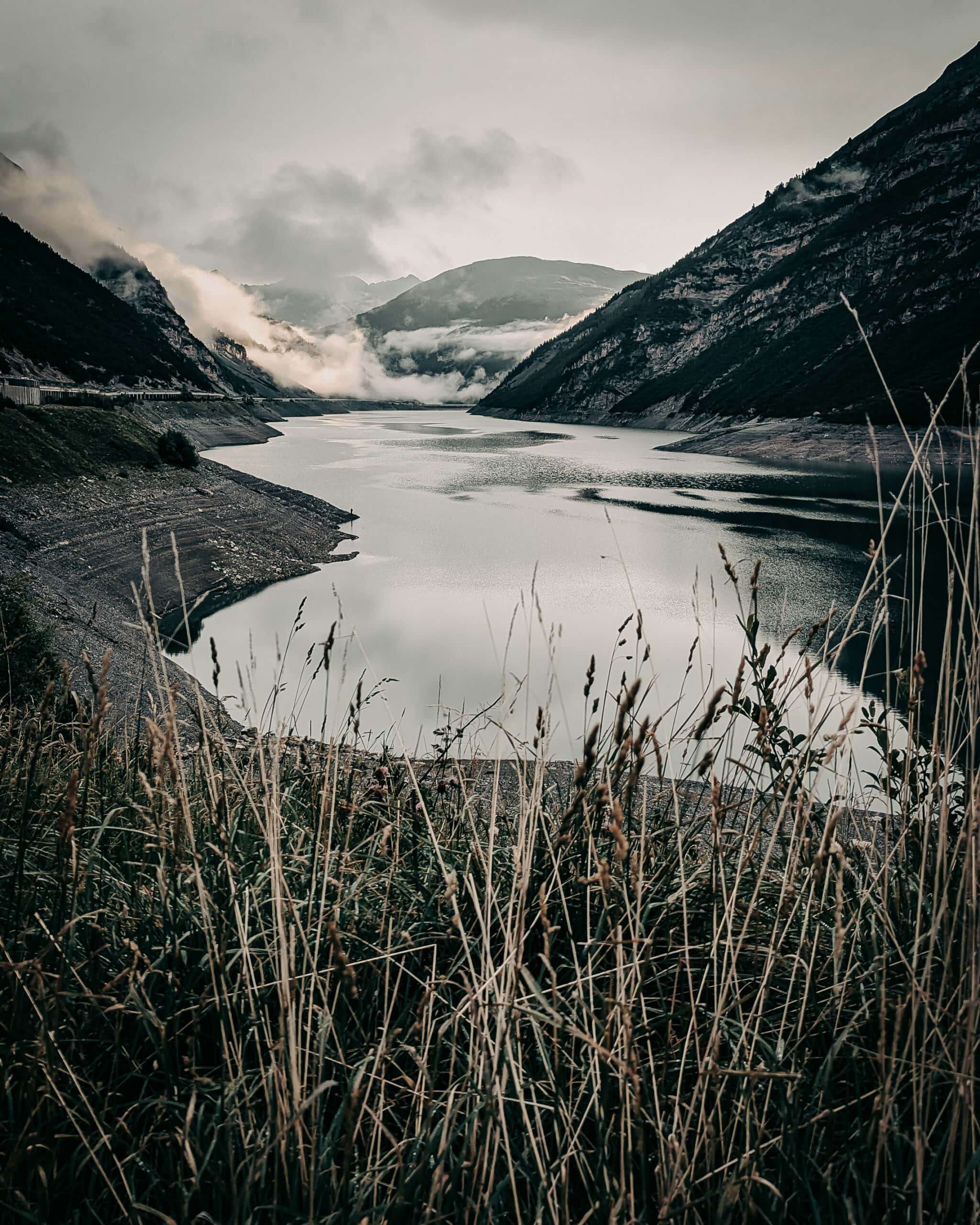
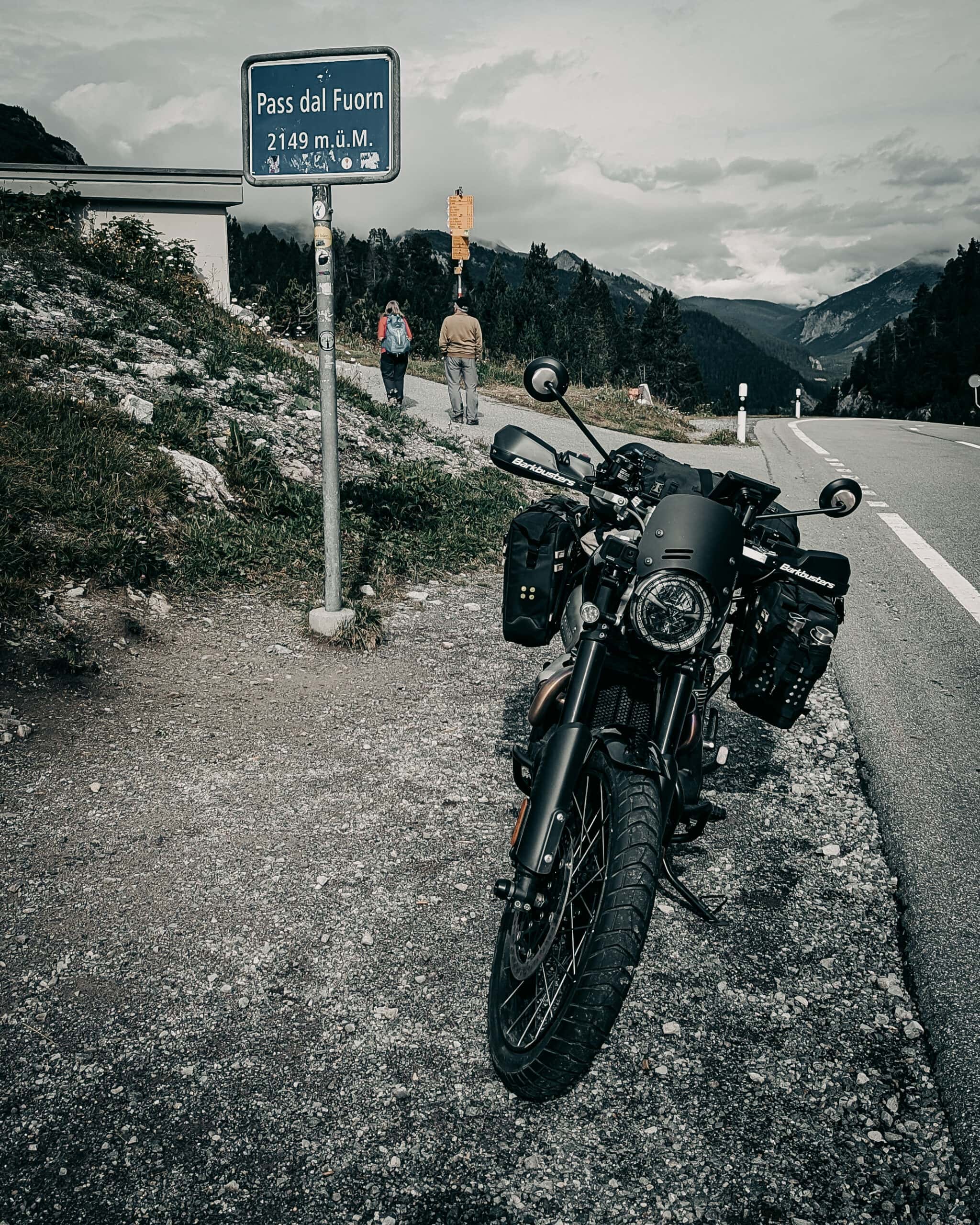
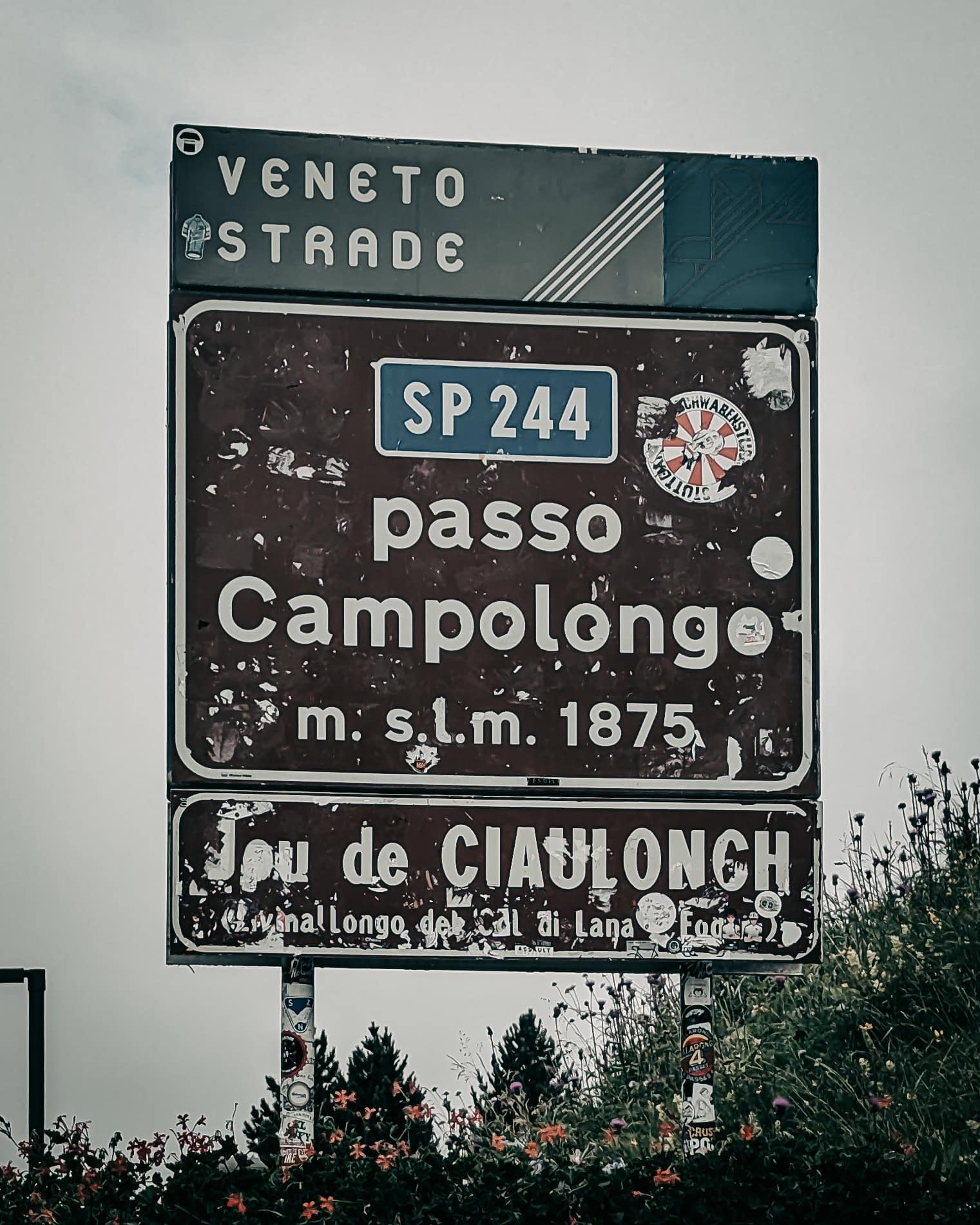
Lago di Livigno, in the actual light of morning, made a decent case for itself despite the night’s drama. The water sat still and pale under a sky that hadn’t yet decided what kind of day it wanted to be, and the ridgelines around the reservoir still had last week’s weather written into a thin dusting on their upper slopes. I packed up methodically — there’s a particular satisfaction in the small choreography of striking camp, rolling the tent tighter than it has any right to go, lashing everything back onto the bike in the order that makes it balance properly — and pointed the front wheel back toward Switzerland.
The road out of Livigno curls back through the tunnel that runs beneath the border ridge, the same route that had brought me across the day before, and there’s something satisfying about retracing a piece of road you’ve already learned, even briefly. You know where it tightens, you know where the light changes as you go underground, you know roughly what to expect when you come out the other side. What waited on the other side this time was the Swiss National Park, and if Livigno had been moody, this was something else entirely.
Riding Through the Swiss National Park to the Ofenpass
The Swiss National Park doesn’t announce itself with much fanfare — no dramatic gates, no oversized signage — but the character of the landscape shifts almost immediately once you’re inside its boundary. This is one of the oldest protected areas in the Alps, and it shows in a way that’s hard to put into words but easy to feel from the seat of a motorcycle: the valleys feel less managed, the forest less tidy, the whole place slightly wilder around the edges than the postcard-perfect villages further down the valley. Riding through it toward the Ofenpass, I had that particular quiet that comes from being somewhere genuinely remote, engine noise aside — no traffic to speak of, no settlements crowding the road, just larch forest, exposed rock, and the kind of air that feels thinner and cleaner even though you’re not that high up yet.
The Ofenpass itself — Pass dal Fuorn if you’re going by the Romansh name that actually belongs to this part of Switzerland — is one of those Alpine motorcycle roads that rewards patience rather than speed. It’s not the tightest, most technical pass in the country, and it’s not trying to be. It winds up through the forest in long, thoughtful curves, opens out into high pastureland near the top, and then does the same in reverse on the way down. After the tension of the night before, there was something almost therapeutic about a road that didn’t ask for hard concentration, just steady, rhythmic riding through scenery that kept unfolding in slow motion on either side.
Crossing Back Into Italy Through the Vinschgau Valley
Coming down the eastern side of the Ofenpass drops you toward the Val Müstair and eventually across the border again, this time into Italy near Taufers — Tubre, if you’re reading the Italian side of the sign. Crossing in and out of countries on a route like this stops feeling remarkable after a while; you’re often more aware of the change in road markings or the sudden appearance of Italian espresso bars than you are of any actual border formality. From Taufers the road runs down through the Vinschgau valley toward Meran, and this stretch was, frankly, a gift after two mountain passes and a rough night — wide, well-surfaced valley road, orchards stacked up the hillsides on both sides, and for a few hours, completely dry.
I want to underline that “dry” part, because it turned out to be the good half of the day’s weather story. The morning had actually been kind, all things considered — no rain through the national park, none over the Ofenpass, none through the Vinschgau. I made good time down through Meran and on toward Bozen, and for a while it looked like the day might turn into one of those rare, uncomplicated riding days where the weather simply lets you get on with it.
Entering the Dolomites at Bozen as the Rain Returns
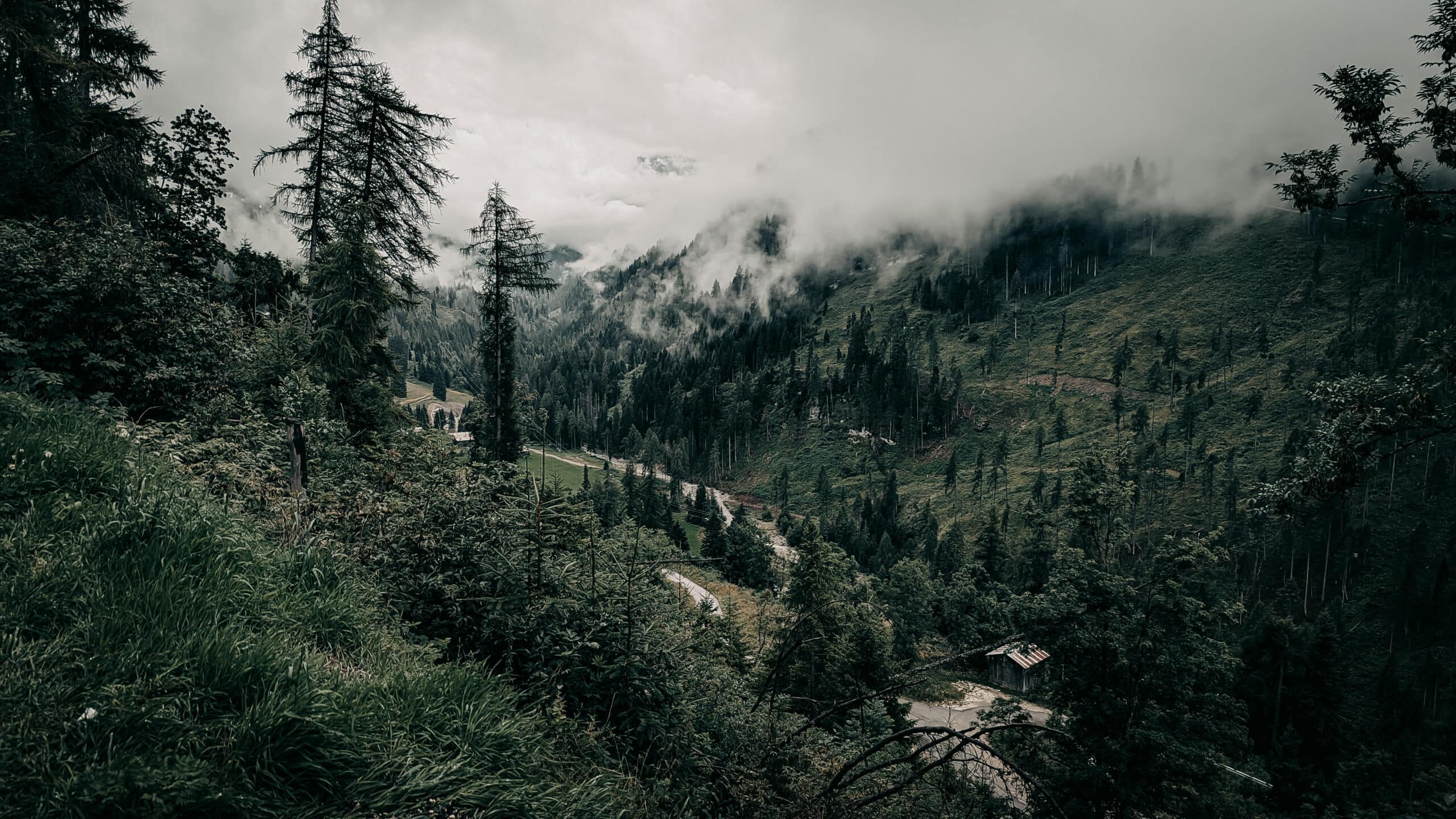
That illusion held until Bozen, more or less exactly. Bozen — Bolzano — marks the point where the wide, orchard-lined valley starts giving way to something steeper and more dramatic, and it’s effectively the gateway into the Dolomites. I turned off toward the mountains with real anticipation; this is one of the parts of the route I’d been looking forward to most, jagged limestone towers instead of rounded Alpine ridgelines, a completely different geology and a completely different mood to the scenery. And for about the length of time it took me to notice how good it looked, the sky decided it had had enough of behaving itself.
The rain that moved in over the Dolomites wasn’t a passing shower. It arrived with intent, the kind of steady, businesslike rain that isn’t interested in negotiating and isn’t going anywhere particular soon. Riding into genuinely spectacular scenery in the middle of a proper downpour is a strange, slightly comic experience — you know, intellectually, that the peaks around you are supposed to be dramatic, but visibility drops, your focus narrows down to the wet tarmac directly in front of the wheel, and appreciation of the landscape becomes something you do in retrospect rather than in the moment. Every hairpin needed more attention than it would have in dry conditions, every patch of painted road marking became something to treat with real suspicion, and my average speed, which had been perfectly respectable through the morning, dropped steadily and kept dropping.
There’s a specific kind of fatigue that comes from riding carefully rather than riding hard — not the fatigue of pushing a bike to its limits, but the fatigue of sustained low-grade vigilance, hour after hour, in conditions that punish the smallest lapse in attention. By the time the light started fading, that fatigue had built up into something I could feel in my shoulders and my grip on the bars, and I made the call to stop looking for scenic detours and just cover ground toward somewhere I could stop for the night.
Wet Gear and a Hard Decision: Tent or Hotel in Pieve di Cadore
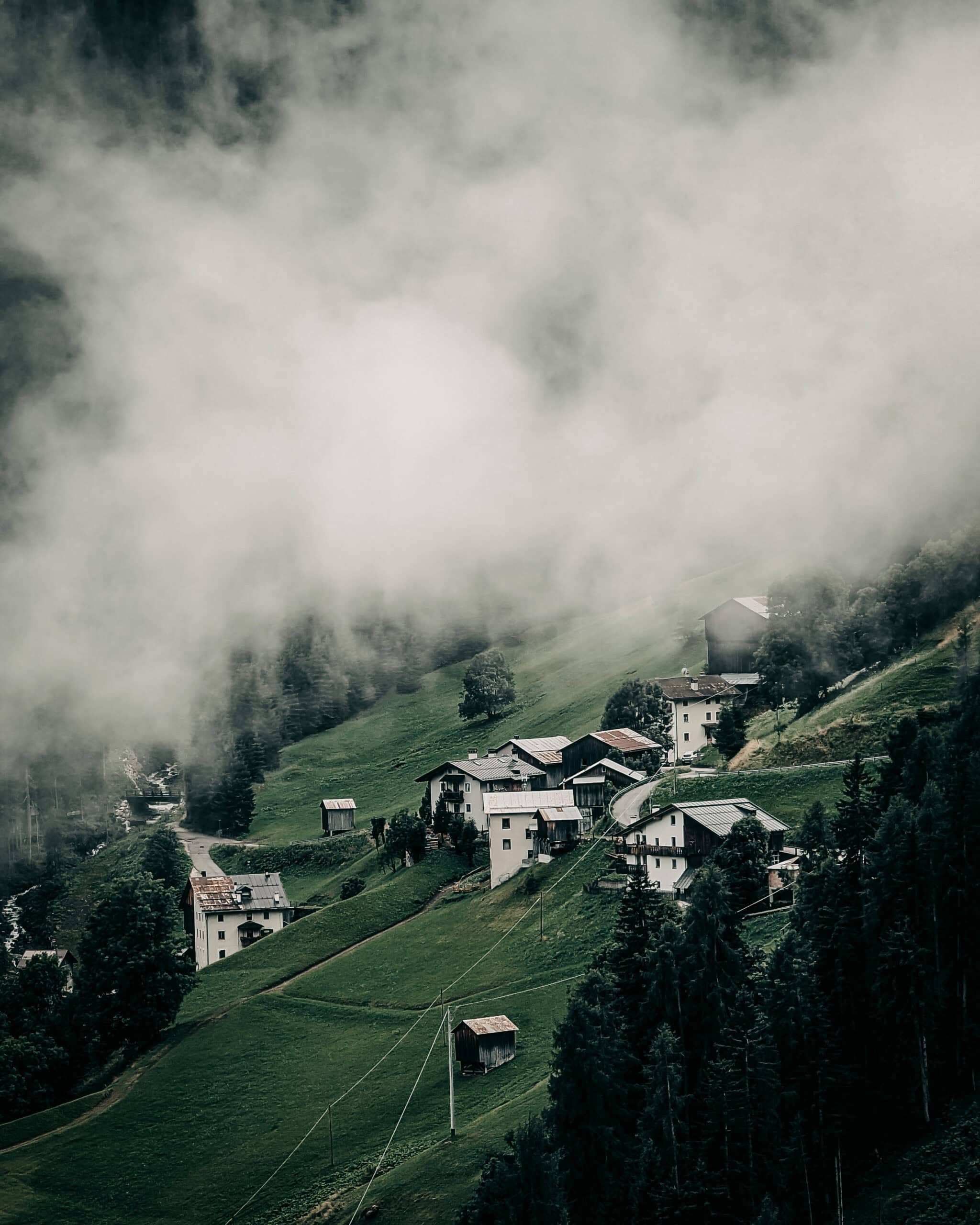
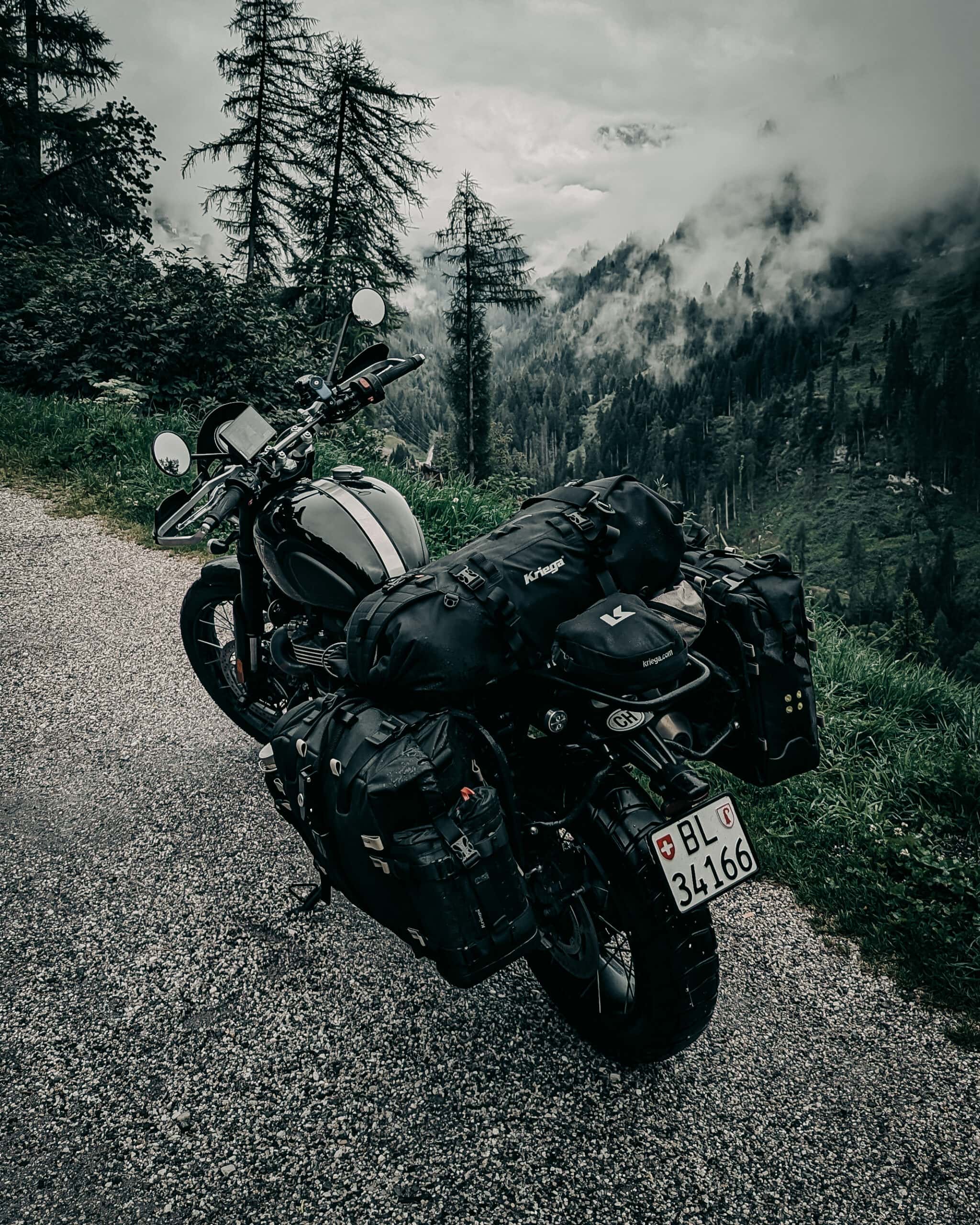
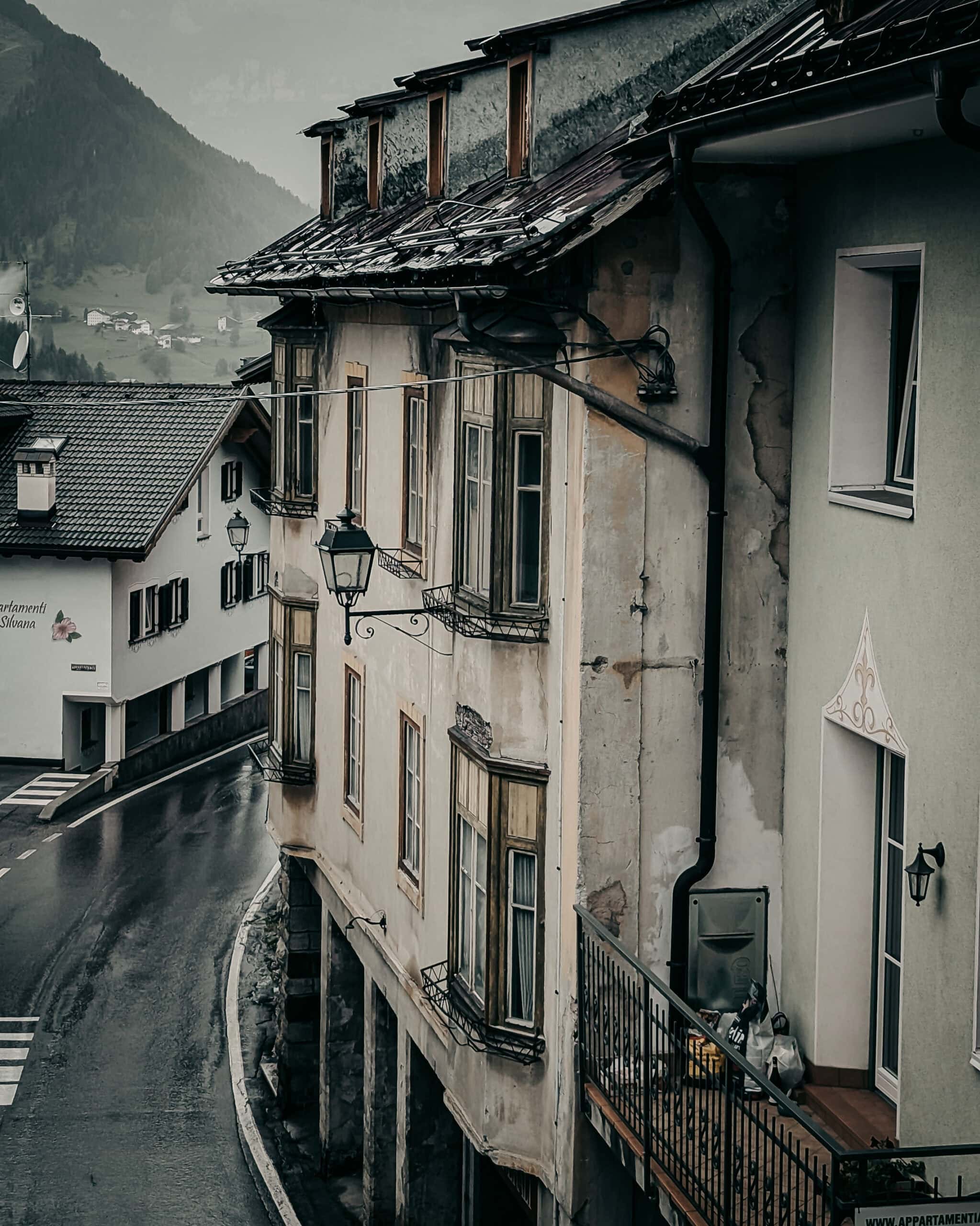
That somewhere turned out to be Pieve di Cadore, a small town in the province of Belluno, tucked into the eastern reaches of the Dolomites. And this is where last night’s experience actually shaped tonight’s decision in a very direct way. I had every intention, in principle, of pitching the tent again — that’s the plan, that’s the trip — but two things argued strongly against it once I actually rolled into town, wet and tired. First, the rain showed no sign of easing, and pitching camp in a proper downpour, in the dark, after a long day, is the kind of thing that sounds character-building in the retelling and miserable while you’re actually doing it. Second, and just as decisive, the tent and its groundsheet were still genuinely damp from packing it up wet that morning at Livigno — condensation and dew from an exposed lakeside pitch, plus whatever moisture had worked its way in during the night’s unwelcome visitors — and climbing into damp gear in the rain, for a second night running, felt less like adventure and more like an unnecessary risk to stay dry and warm.
So I did the sensible thing, which occasionally has to win out over the purist thing, and took a hotel room in Pieve di Cadore for the night. There’s a particular relief in that decision that I don’t think I’d fully appreciated before this trip — the moment you swap wet gear for dry gear, boots off, jacket hung somewhere it might actually dry out by morning, and you can finally let your shoulders drop from wherever they’d been sitting all day. It’s not the wild camping experience the trip is built around, but it’s the right call often enough that I don’t think it counts against the spirit of things. Motorcycle touring, especially solo and especially through the Alps, rewards flexibility more than it rewards stubbornness, and knowing when to take the hotel room instead of the tent pitch is its own kind of skill.
A Day of Two Halves: Ofenpass Sunshine and Dolomites Rain
Looking back at the day as a whole, it’s a strange one to sum up, because it genuinely had two very different characters stitched together. The first half — the ride out of Livigno, the tunnel back into Switzerland, the quiet grandeur of the national park, the long, patient curves of the Ofenpass, the dry, easy run down through the Vinschgau to Meran and Bozen — was close to ideal touring, the kind of riding that reminds you exactly why you do this in the first place. The second half, from Bozen into the Dolomites, was a lesson in the other side of the same coin: weather that turns on you exactly when the scenery gets most spectacular, an average speed that quietly erodes over hours of careful riding, and a night that ends in a hotel room instead of a tent, not because the plan changed, but because the day demanded it.
And bookending both halves was that uneasy night by Lago di Livigno, which is still sitting with me a little this morning, if I’m honest. Nothing happened. But the reminder that nothing happening isn’t the same as nothing being possible is one I’ll be carrying with me for the rest of this route — a little more attention to where exactly I pitch camp, maybe, and a little less assumption that a quiet lakeside spot is automatically a safe one.
The Unglamorous Reality of Riding a Motorcycle in Heavy Rain
There’s also something worth saying about the practical side of a day like this, the unglamorous logistics that don’t usually make it into the highlight reel but that end up shaping how the whole ride actually feels. Riding in sustained rain for hours isn’t just a question of visibility and grip; it’s a slow, cumulative drain on everything — on the electronics tucked away in tank bags and panniers, on the seams of even genuinely good rain gear, on your own core temperature as the day wears on. My gloves, which had done a solid job through the morning’s dry stretch, were the first thing to give up the fight somewhere on the descent toward Bozen, and by the time I reached the Dolomites proper I was riding with hands that had gone from merely damp to fully soaked, which has a way of making every clutch input and every gear change feel that much less precise. It’s a small thing, but it compounds over a few hours, and it’s part of why the final stretch into Pieve di Cadore felt considerably longer than the map distance suggested it should.
First Glimpses of the Dolomites Through Cloud and Rain
The Dolomites themselves, glimpsed through sheets of rain and low cloud, were still doing enough to justify their reputation even under the worst possible viewing conditions. Every so often the cloud would thin just enough to reveal a jagged grey wall of rock rising out of nowhere on one side of the valley, vertical in a way that the rounder peaks further west simply aren’t, and then the cloud would close back over it before I’d had more than a few seconds to actually take it in. It’s an odd kind of teaser, riding through a mountain range this dramatic while only getting fragments of it at a time, but if anything it sharpened my appetite to come back through here properly, on a clear day, without a schedule pushing me toward the nearest town with a bed.
Pieve di Cadore, when I finally rolled in, turned out to be a pleasant surprise in its own right — a small, unhurried town with the kind of old town center that looks like it hasn’t needed to change much in a long time, sitting above a reservoir that even in the rain and fading light had a quiet, dignified sort of beauty to it. I didn’t see much of it beyond the road in and the short walk from the bike to a hot shower, but even that brief impression left me thinking I’d like to see this part of Belluno province again under better circumstances, with time to actually explore rather than just pass through on the way to somewhere dry.
Reflections From Pieve di Cadore and What’s Next
Settling into the hotel room tonight, gear draped over every available radiator and chair in the vague hope that some of it might actually be dry by morning, it struck me how much a single day on this kind of trip can hold — an uneasy night, a genuinely beautiful stretch of protected wilderness, a mountain pass ridden in the best conditions you could ask for, and then a hard, wet slog into one of the most celebrated mountain ranges in Europe, seen mostly through a rain-streaked visor. That’s touring on two wheels in the Alps in a nutshell, I think: the good and the difficult sitting right next to each other, sometimes separated by nothing more than a single mountain and a change in the weather.
Tomorrow, weather permitting, the plan is to actually see the Dolomites properly, in daylight, ideally without quite so much rain in the way. Tonight, though, dry gear, a real bed, and a town called Pieve di Cadore that I arrived in far more grateful for a roof than I expected to be when I set out this morning from the shore of a lake I’m still not entirely sure I want to camp beside again.