
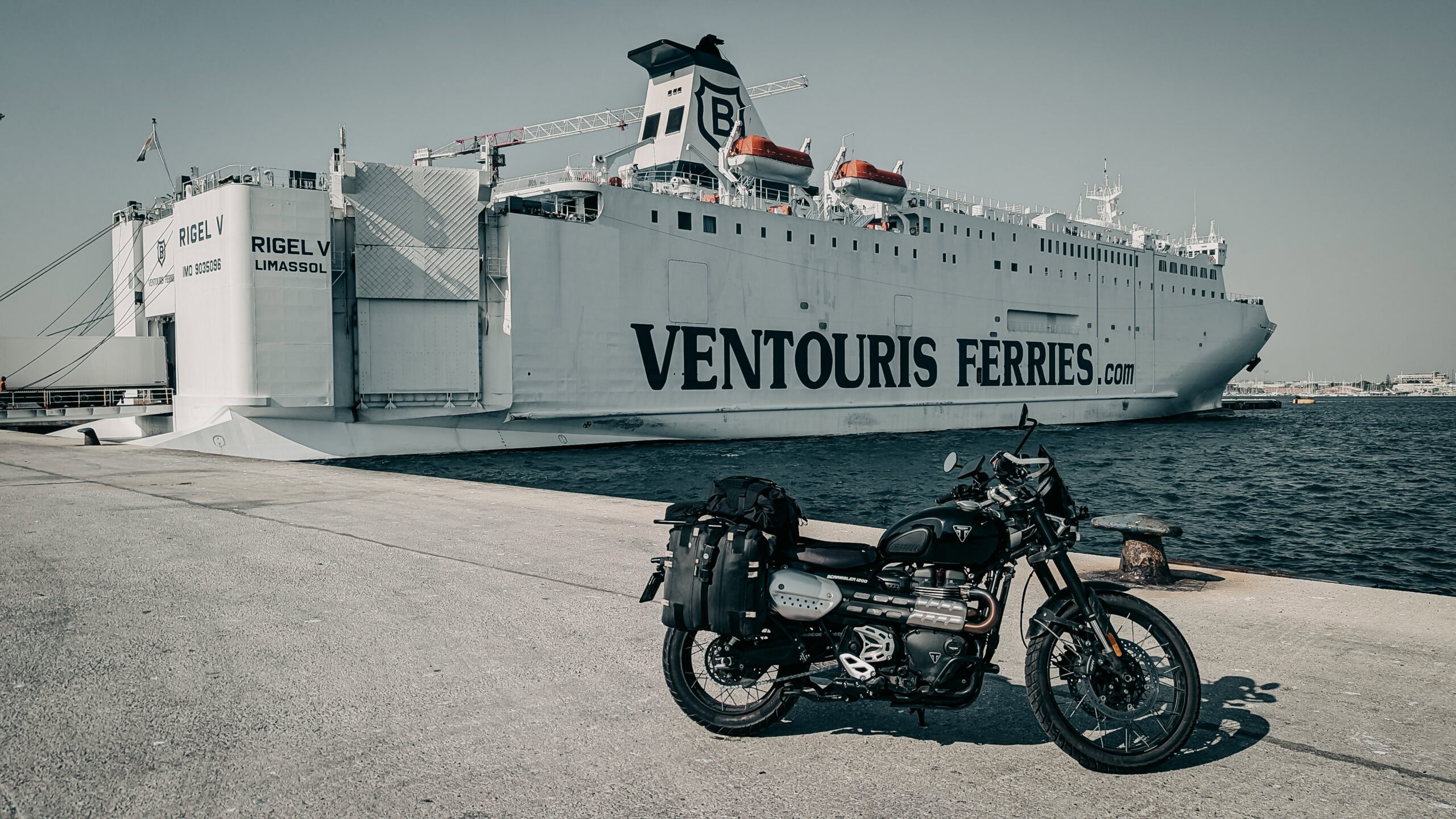
One More Sunrise on the Adriatic
After the surprisingly restful night on the Ventouris Ferries crossing from Igoumenitsa, I woke up somewhere in the middle of the Adriatic feeling more rested than I had any right to expect. Having managed to snag that small four-person cabin with its own bathroom the night before had turned out to be one of the better strokes of luck on this entire trip. I slept soundly, and when I finally opened my eyes, there was no urgency, no alarm, no border to rush toward — just the quiet hum of the ship’s engines and the knowledge that Italy was somewhere out there, waiting.
I got up relatively early, showered, cleared out the cabin, and went looking for coffee. Ferry coffee is never going to win any awards, but there’s something about drinking a lukewarm cup on the deck of a ship at dawn that makes it taste better than it has any right to. With cup in hand, I made my way up to the open deck to catch the sunrise on the way into Bari.
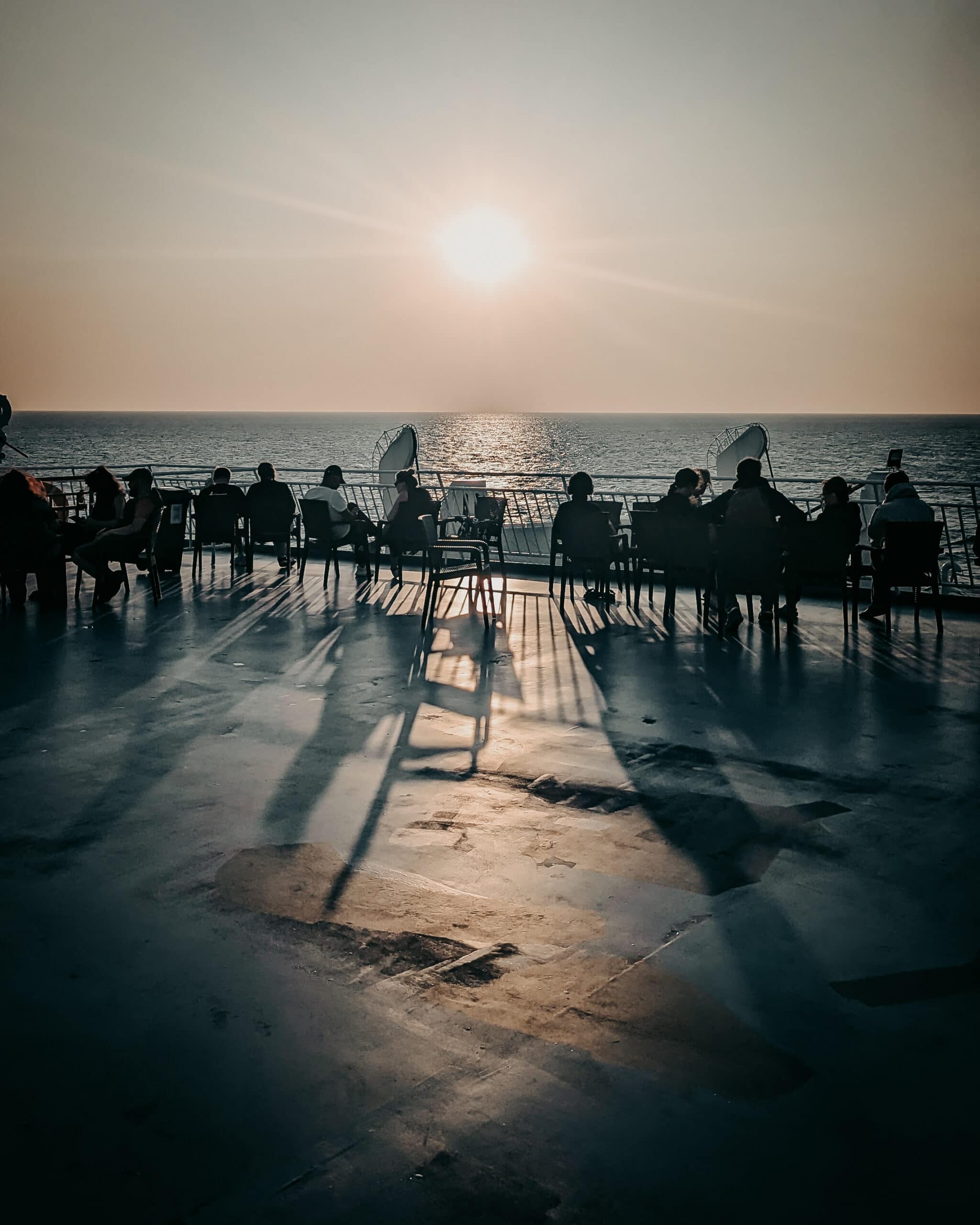
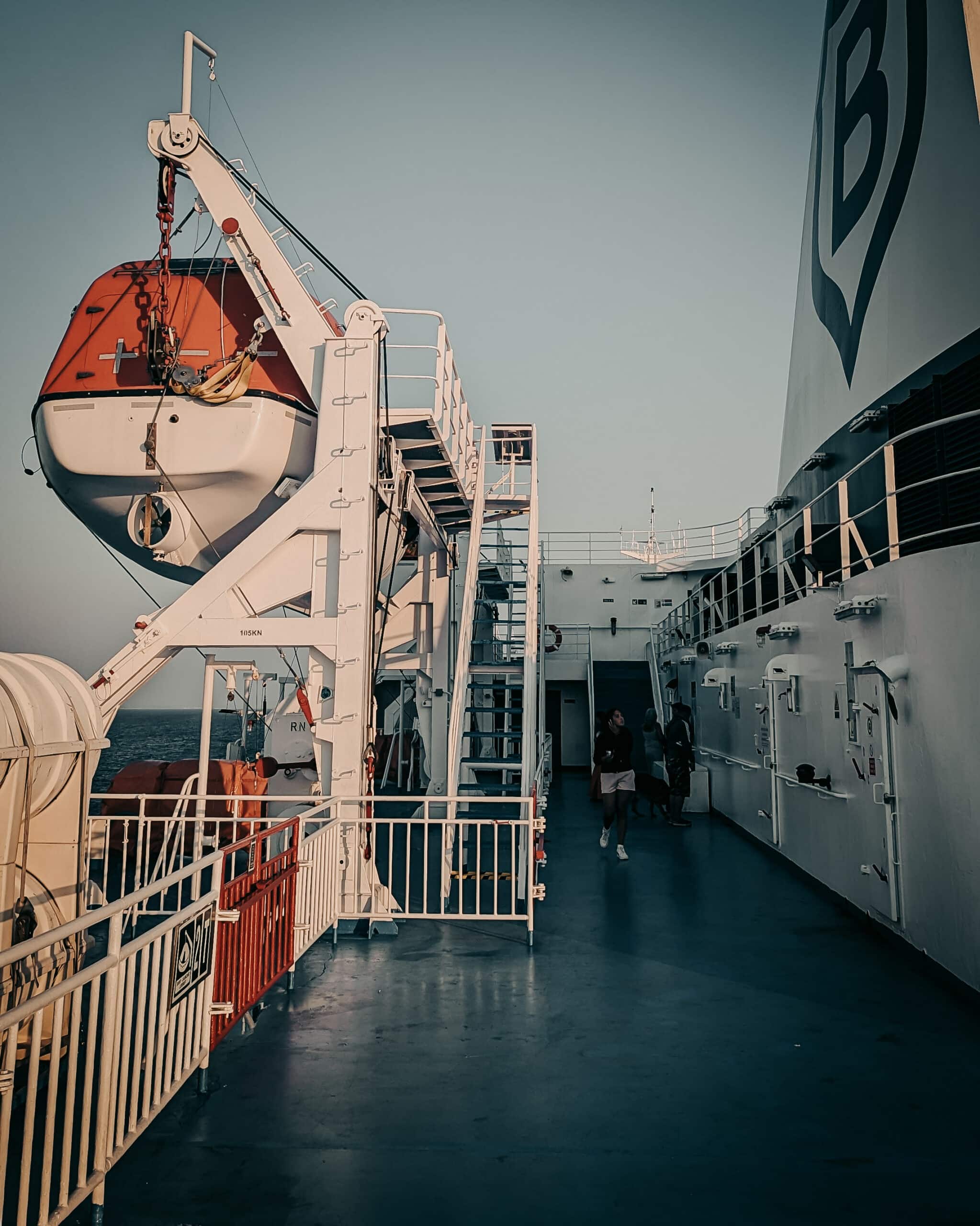
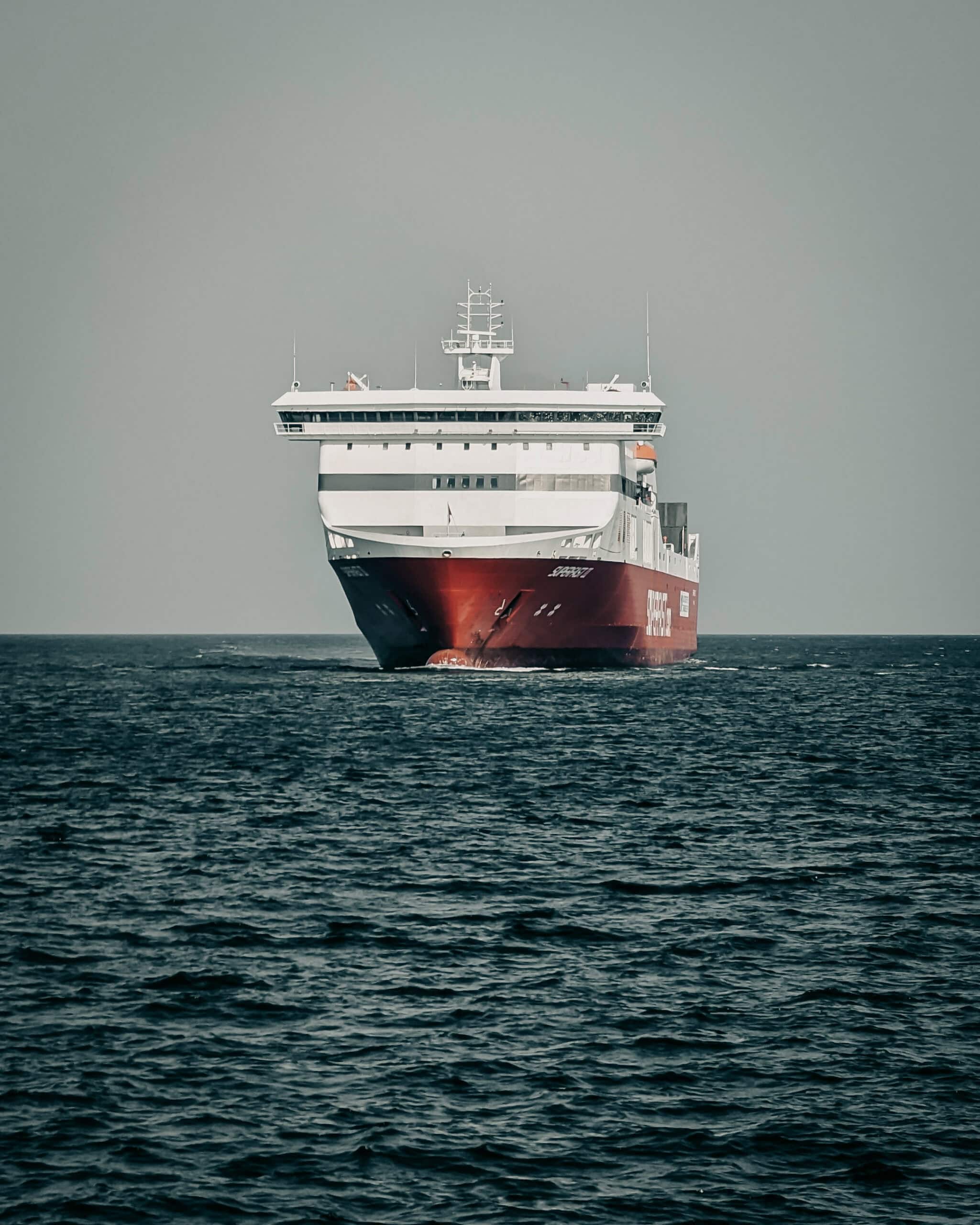
There’s a particular kind of stillness to watching a sunrise from a moving ship. The horizon is completely uninterrupted, the light comes up slowly across the water in long golden streaks, and the other passengers scattered around the deck — some in silence, some quietly chatting, most just watching — all seem to fall into the same unspoken agreement to just be quiet and take it in. Watching the sun come up over the Adriatic on the final stretch toward Bari was one of those small, unplanned moments that end up sticking with you long after the bigger landmarks of a trip fade.
Arrival in Bari
By the time the ferry docked and I rolled the Scrambler off the ramp back onto solid ground, Italy officially had me. After eighteen days spent working my way through the Balkans, Turkey, and Greece, there was something almost surreal about being back on familiar European roads, with Italian road signs, Italian traffic, and Italian bureaucracy waiting just around the corner — though thankfully not yet.
Rather than beelining straight for the highway, I decided to ride through Bari’s old town before pointing the bike west. Bari’s centro storico turned out to be genuinely beautiful — a tight maze of whitewashed buildings, narrow alleys barely wide enough for a scooter, laundry lines strung overhead, and that particular southern Italian energy where everything feels lived-in rather than staged for tourists. I only had time for a slow ride-through rather than a proper walk around, but it was enough to know that Bari deserves a longer visit at some point. It’s the kind of place that rewards wandering, and I didn’t get to wander nearly enough. Definitely one for the “come back properly” list.
But the itinerary for the day was ambitious, and Bari was only the starting point. From the old town, I got back on the motorcycle and pointed it west, toward the other side of the Italian peninsula.
Riding out of Bari, I couldn’t shake the slightly frustrating feeling that comes with passing through somewhere genuinely interesting on a schedule built around distance rather than discovery. This trip had been full of moments like that — brief, tantalizing glimpses of places that clearly deserved days rather than minutes, filed away mentally under “next time” as the wheels kept turning. Bari joined a growing list that already included Corfu from the day before, and probably a dozen other towns and cities scattered across the Balkans that I’d ridden through without stopping.
Straight Across the Boot
The plan for the day was about as direct as motorcycle travel gets: cut straight across Italy, coast to coast, from the Adriatic side to the Tyrrhenian side, aiming for Naples and, beyond that, the Amalfi Coast. On a map, it doesn’t look like much — Italy isn’t especially wide at this latitude — but at highway speeds with a loaded motorcycle, it’s still a solid stretch of riding through changing landscapes, from the flatter agricultural land around Bari to the hillier terrain further west.
I took the Autostrada for most of the crossing, which meant long, straight stretches of tarmac, toll booths, and not a huge amount of visual variety compared to the mountain roads and coastal switchbacks from earlier in the trip. But there was one significant upside: traffic was refreshingly light. Whatever mid-August exodus was happening on Italian roads that day, it apparently wasn’t happening on my particular stretch of highway, and I made good time crossing the country.
The heat, unfortunately, made a return appearance. After a brief respite crossing the Adriatic overnight, the temperatures climbed right back into brutal territory once I was back on solid, sun-baked Italian asphalt. Riding a fully loaded motorcycle in direct sun on a highway with no shade is its own particular kind of endurance exercise, and by the time I reached the western side of the peninsula, I was more than ready for a break — even if the day had other plans first.
There’s a certain monotony to highway riding that long-distance touring eventually teaches you to appreciate rather than resent. Unlike the mountain passes and coastal roads that demand constant attention, a straight Autostrada crossing gives your mind room to wander. Somewhere in the middle of that long stretch across Italy, I found myself mentally replaying the last few weeks — the Balkan back roads, the chaos of Istanbul traffic, the heat of the Turkish interior, Meteora’s impossible rock formations, and now this: a fast, featureless slog across a country I’d normally have wanted to explore properly. Sometimes a trip like this is as much about the transitions between highlights as the highlights themselves.
An Expensive Lesson in Carrying Change
Somewhere around Naples, the crossing produced its one genuinely frustrating moment of the day. Approaching one of the toll stations on the outskirts of the city, I discovered that the particular booth I’d rolled up to didn’t accept credit cards — cash only, and specifically coins, not even bills. Of course, riding a motorcycle across multiple countries for nearly three weeks, I hadn’t exactly been carrying around a stash of euro coins. I had no cash at all, let alone the right kind.
There was no attendant at the booth, no alternative payment terminal, and — this being an Italian Autostrada toll plaza — absolutely no way to simply turn around and find another lane once you’re committed to the barrier. I was stuck, engine idling, with a queue building behind me and no way to pay.
What followed was one of those small, slightly undignified moments that somehow end up being memorable precisely because of how absurd they are. I got off the bike, walked around the toll booth area, and started scanning the ground for loose change — the kind of coins that inevitably get dropped by other drivers fumbling with their own toll payments. Sure enough, after a bit of searching, I managed to scrape together just enough scattered coins off the pavement to feed into the machine and lift the barrier.
It worked, but it left me wondering: what happens to someone who shows up at that exact toll booth with genuinely nothing — no card, no coins, and no luck finding spare change on the ground? There was no visible mechanism for that scenario. No help button, no camera intercom, nothing. I have no idea what the intended solution is supposed to be, but I was very glad not to have to find out the hard way.
It’s a small thing in the grand scheme of a three-week international motorcycle trip, but moments like that have a way of sticking with you precisely because of how absurd they are in the moment. Here I was, having crossed a dozen countries, navigated language barriers, unfamiliar traffic laws, and border checkpoints, only to be genuinely stumped by a coin-operated Italian toll gate. Travel has a way of humbling you in the most mundane ways possible.
Past Vesuvius and On to the Coast
With the toll drama behind me and a small case of adrenaline fading, I continued on toward Naples proper, catching glimpses of Mount Vesuvius looming on the horizon as I rode past the city. There’s something quietly unsettling about riding past one of the most famous volcanoes in the world, half-shrouded in summer haze, knowing exactly what it did to Pompeii two thousand years ago and that it’s still, technically, an active volcano sitting next to millions of people. I didn’t have time to stop and explore it properly on this trip, but even a passing glimpse of that unmistakable silhouette was worth the detour.
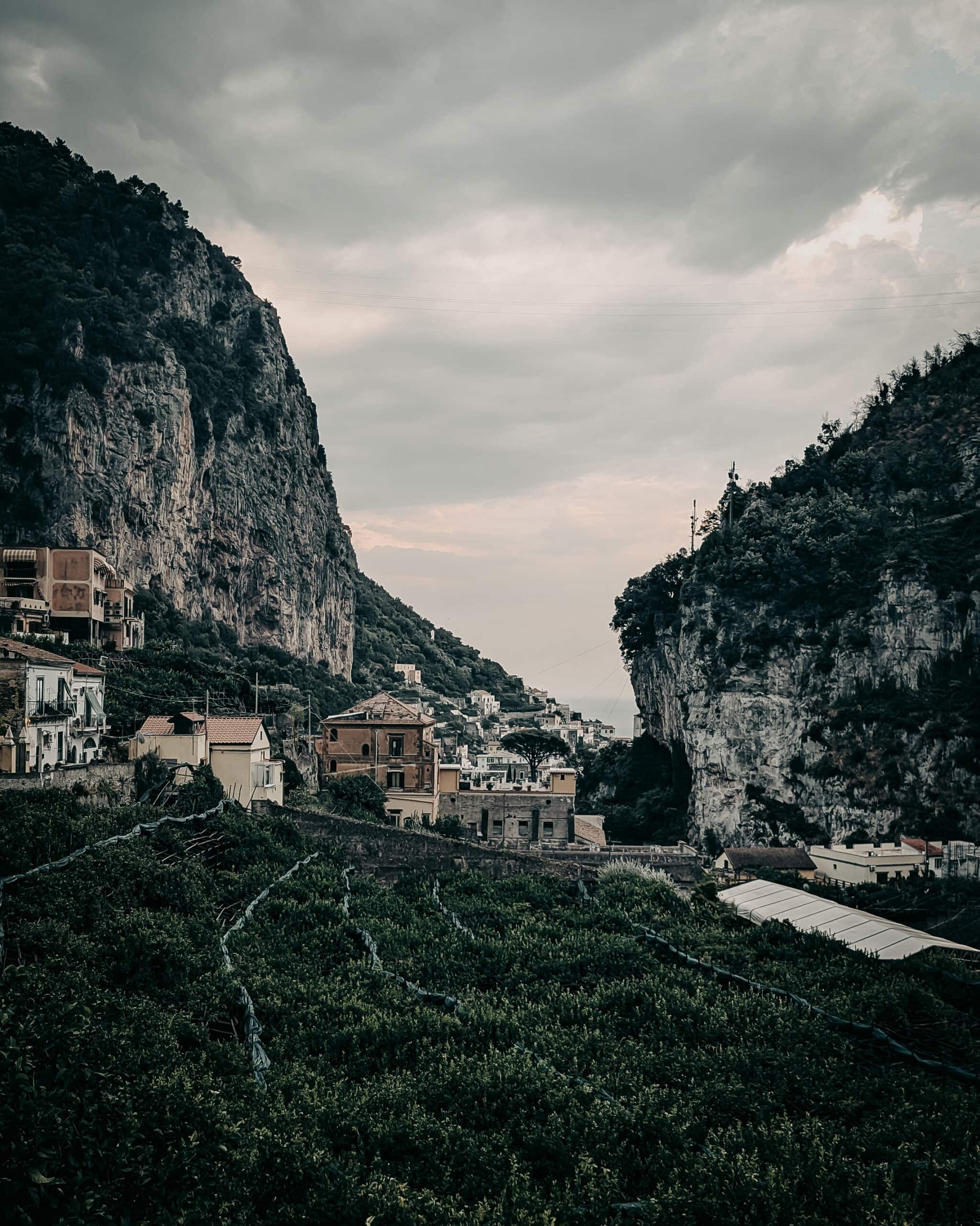
From Naples, the road curved south and the landscape started to change dramatically. The flat highway gave way to twisting coastal roads, the traffic thickened, and the scenery shifted from industrial outskirts to the kind of dramatic, cliffside Mediterranean coastline that the Amalfi Coast is famous for. By late afternoon, I finally arrived on the Amalfi Coast itself, rolling into the town of Amalfi as the light started to soften toward evening.
First Impressions: Overwhelming in Every Sense
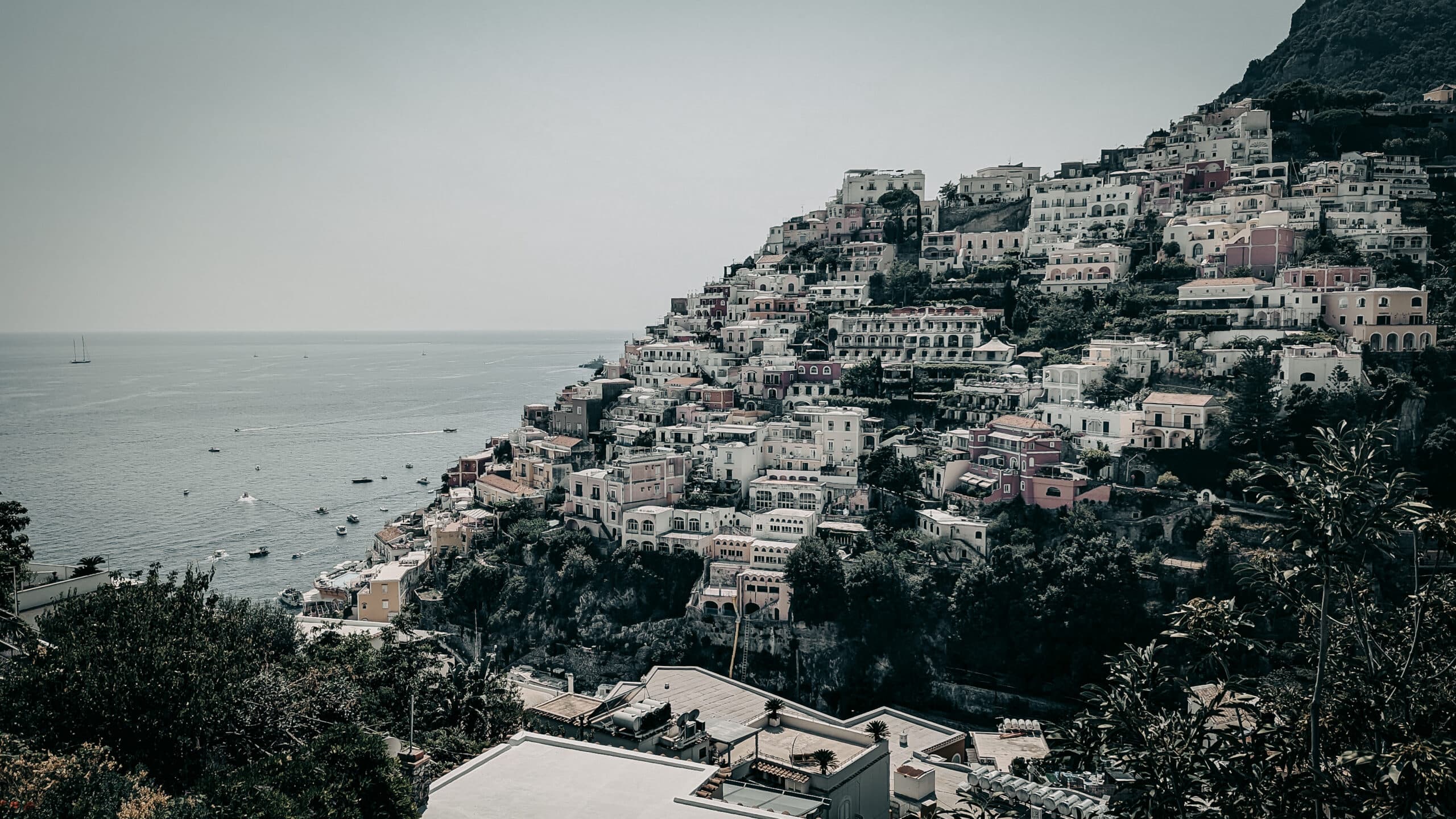
My first impressions of the Amalfi Coast were, honestly, a mix of awe and mild exasperation. The scenery is exactly as spectacular as every photo and travel article promises — steep cliffs dropping straight into turquoise water, pastel-colored towns stacked impossibly on top of each other, winding roads carved directly into the rock face. It’s the kind of landscape that genuinely earns its reputation.
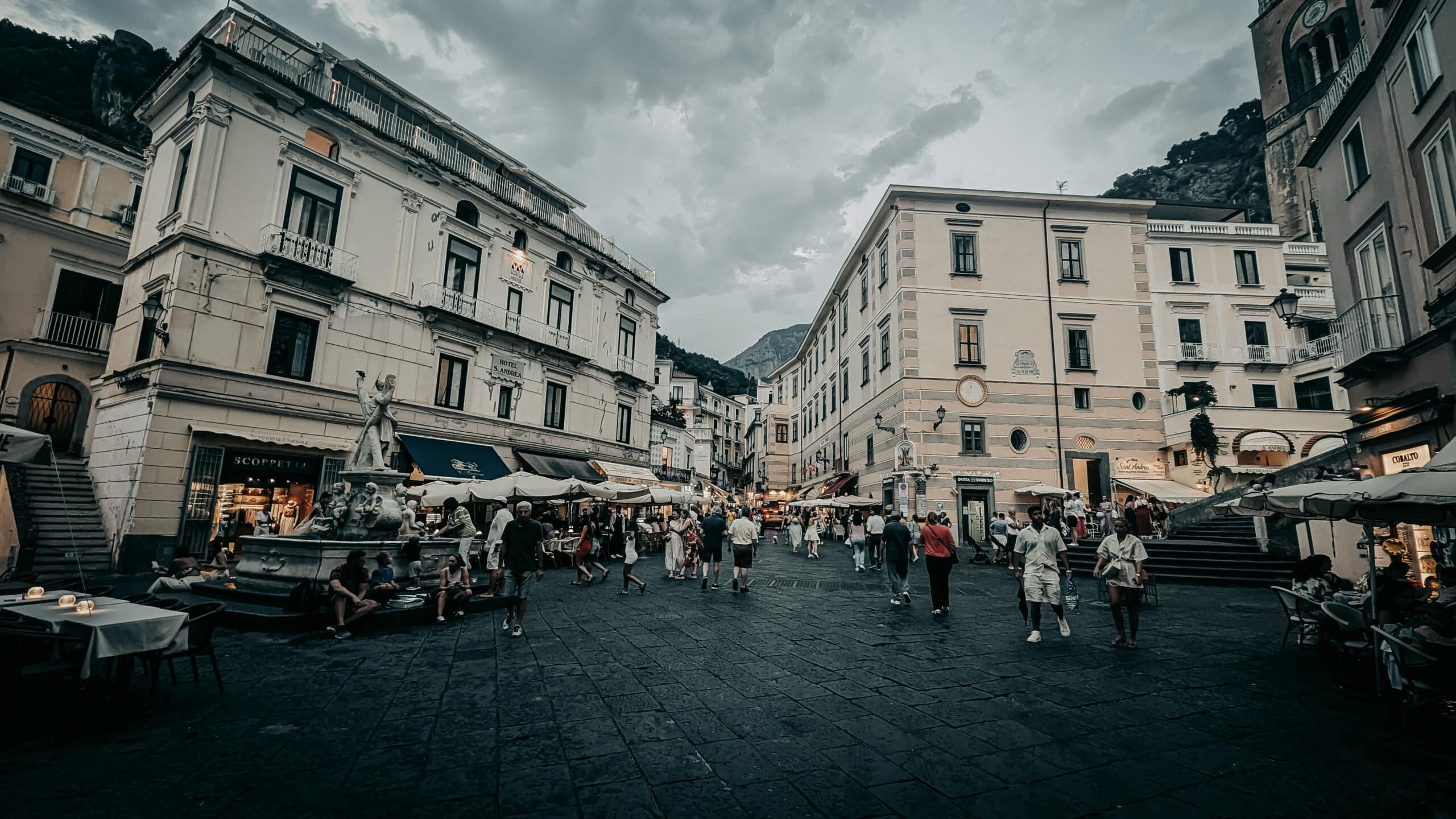
The problem is that apparently everyone else on the planet had the exact same idea about visiting in mid-August. The sheer number of tourists in Amalfi was overwhelming — easily one of the most crowded places I passed through on this entire trip. Narrow streets built centuries ago for foot traffic and the occasional mule were now packed wall-to-wall with visitors, all moving at the particular shuffling pace that happens when too many people try to occupy too little space at once.
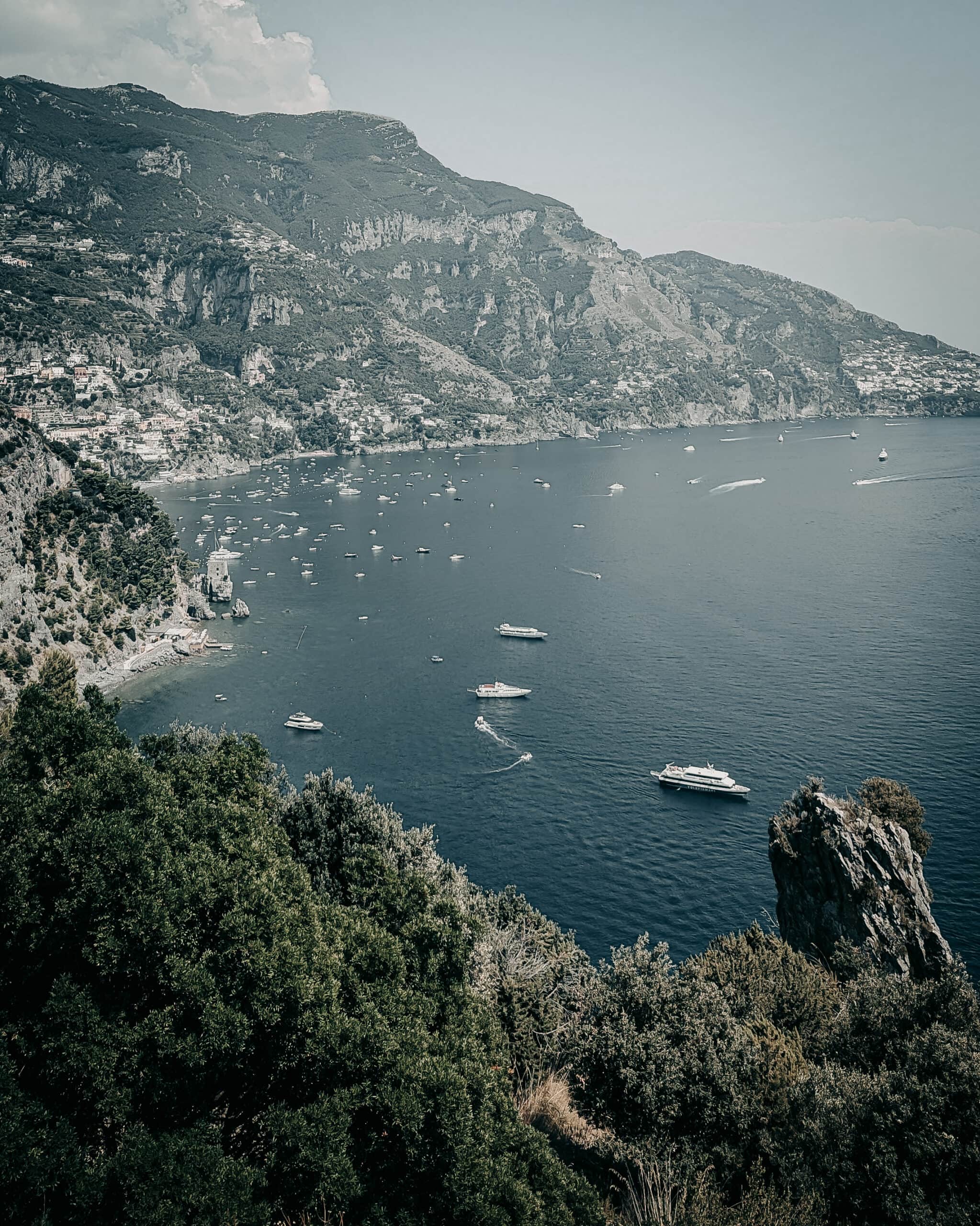
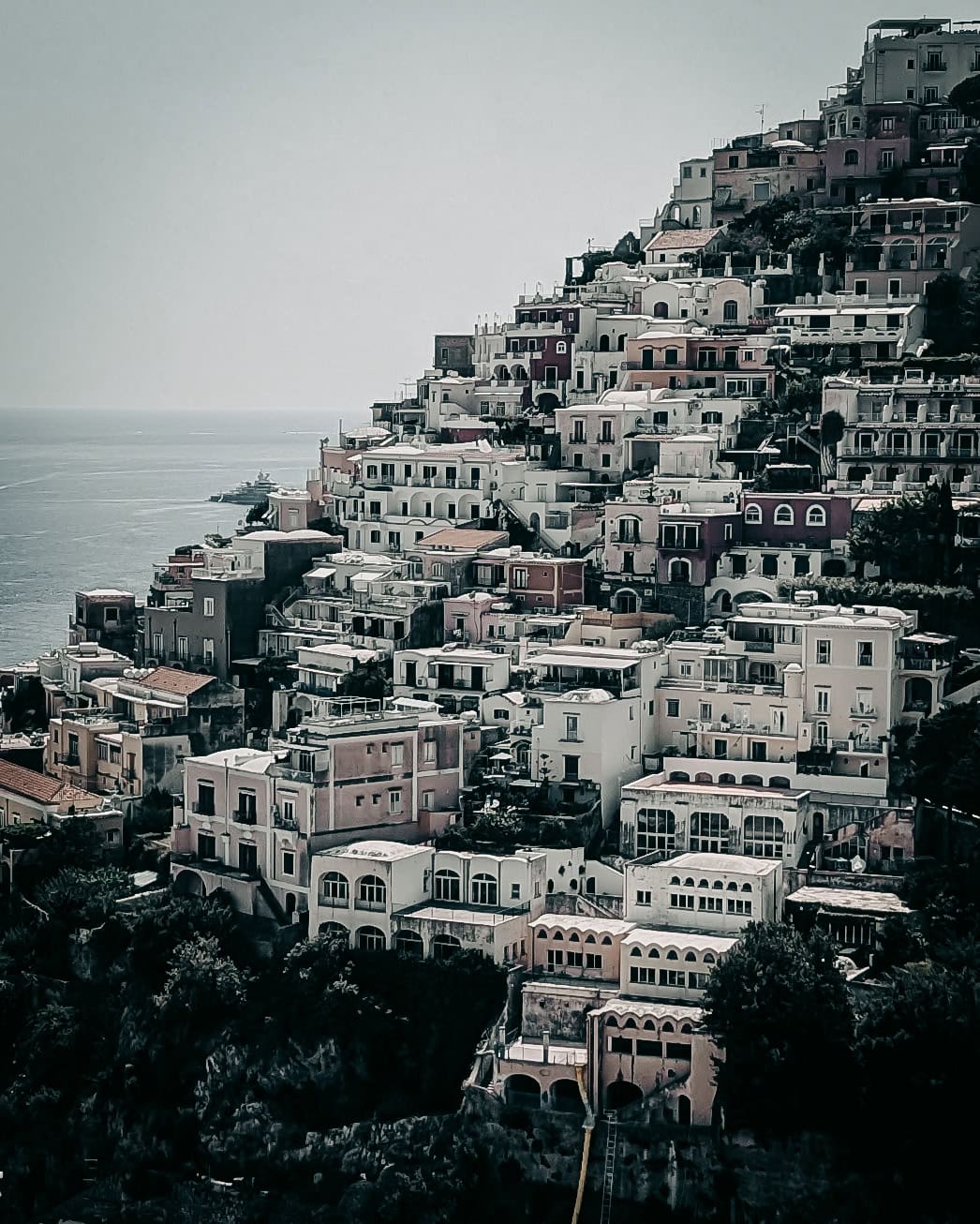
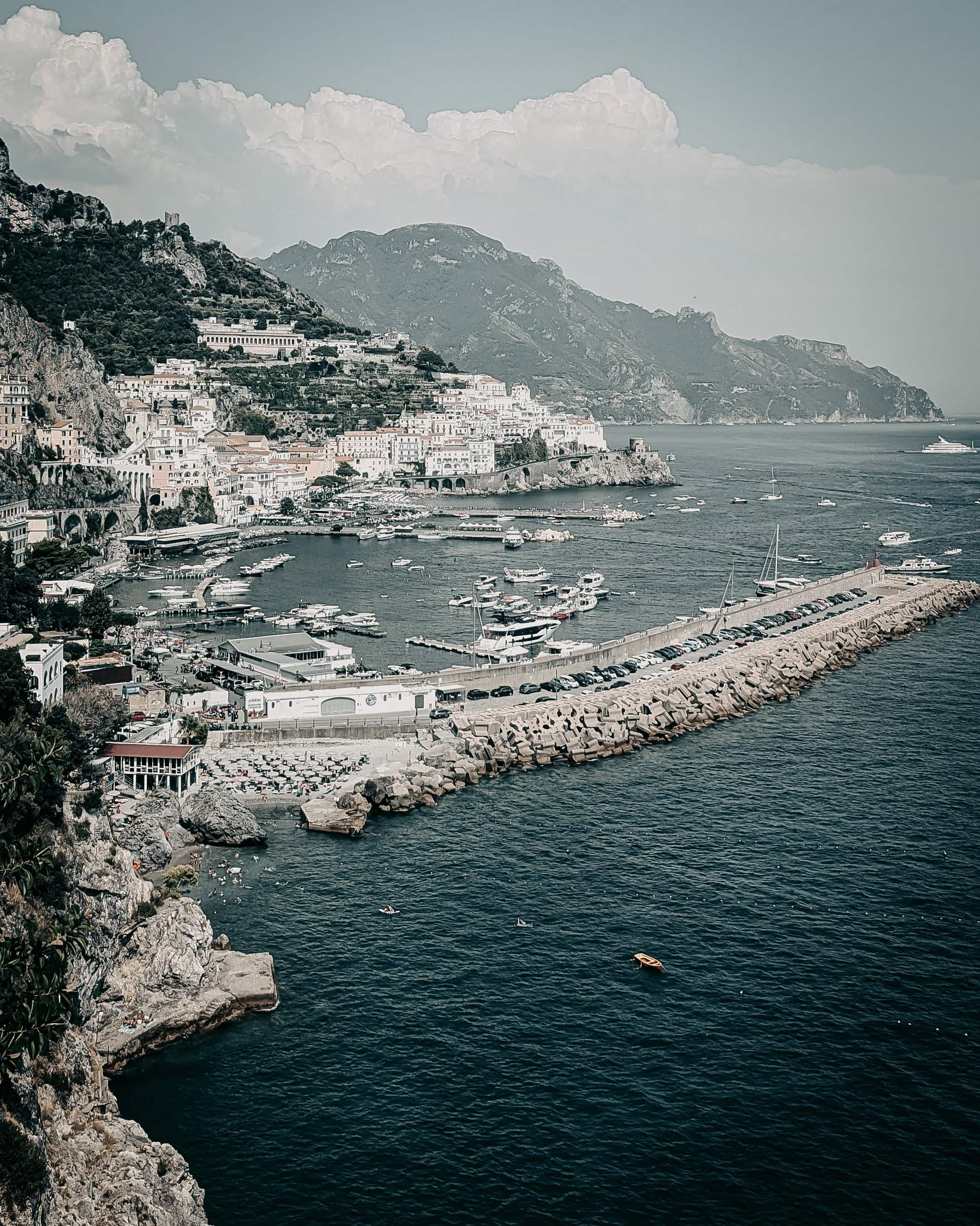
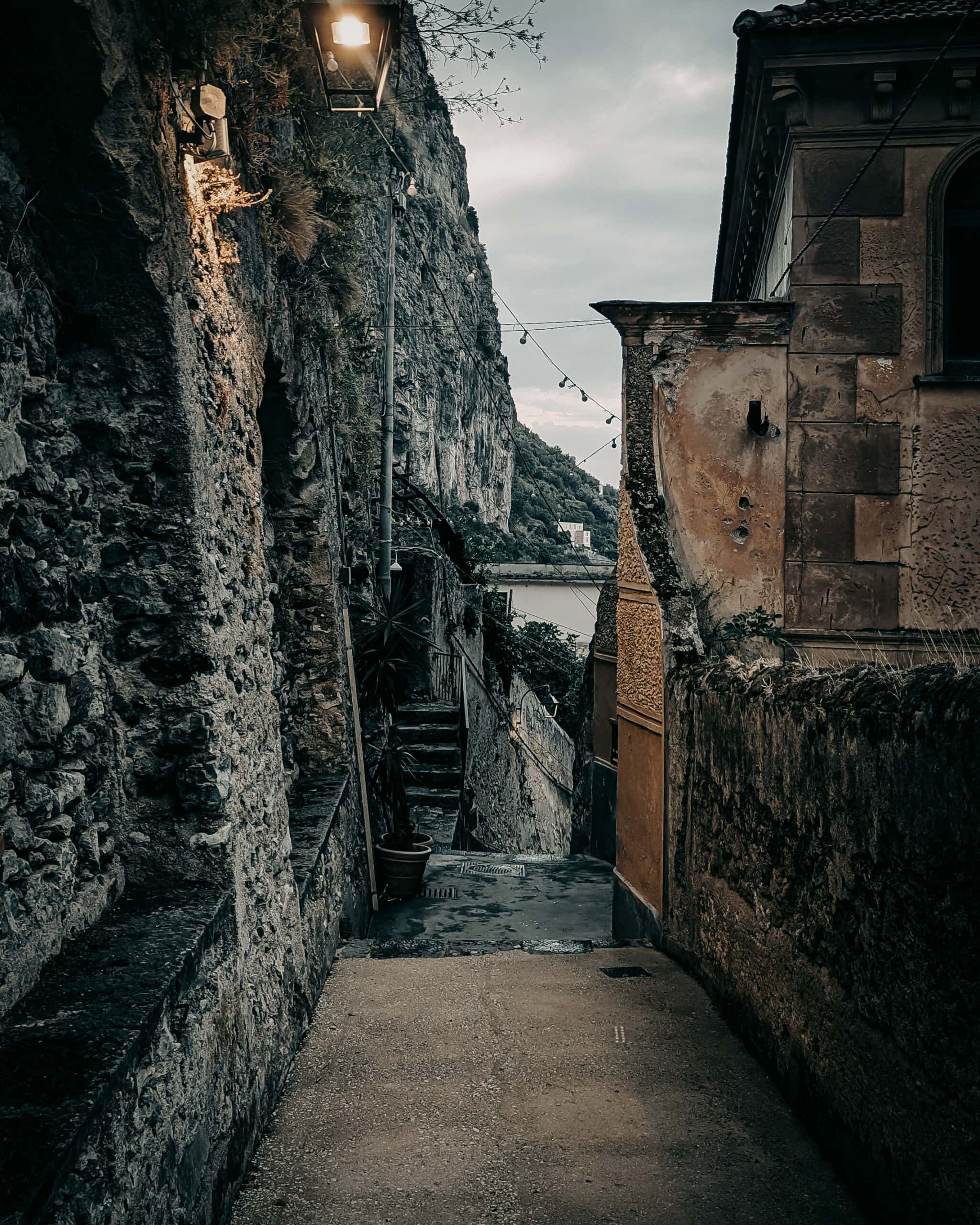
I’d booked a small room fairly far back from the main part of town, up and away from the harbor and the worst of the crowds, and that turned out to be a smart, if unintentional, decision. The walk in from where I’d parked the bike gave me a good preview of just how packed the front of town really was — and reaching my quieter accommodation felt like stepping out of a stream and finally being able to breathe.
Finding parking for a loaded motorcycle in a town built entirely around narrow pedestrian lanes and vertical stone staircases turned out to be its own small adventure. Amalfi wasn’t designed with modern traffic in mind, let alone modern tourist traffic at this volume, and the roads leading in and around the town were choked with a mix of taxis, delivery scooters weaving through pedestrians, and tour buses disgorging groups of visitors directly into the already-packed main square.
Settling In and Wading Back Into the Crowds
After getting the motorcycle parked and all my gear deposited in the room, I took a short break to rest and clean up before heading back out to actually see the town properly. There’s a rhythm to arriving somewhere new after a long day of riding: get the bike sorted, get the gear off your body, sit still for ten minutes doing absolutely nothing, and only then start thinking about food and exploring.
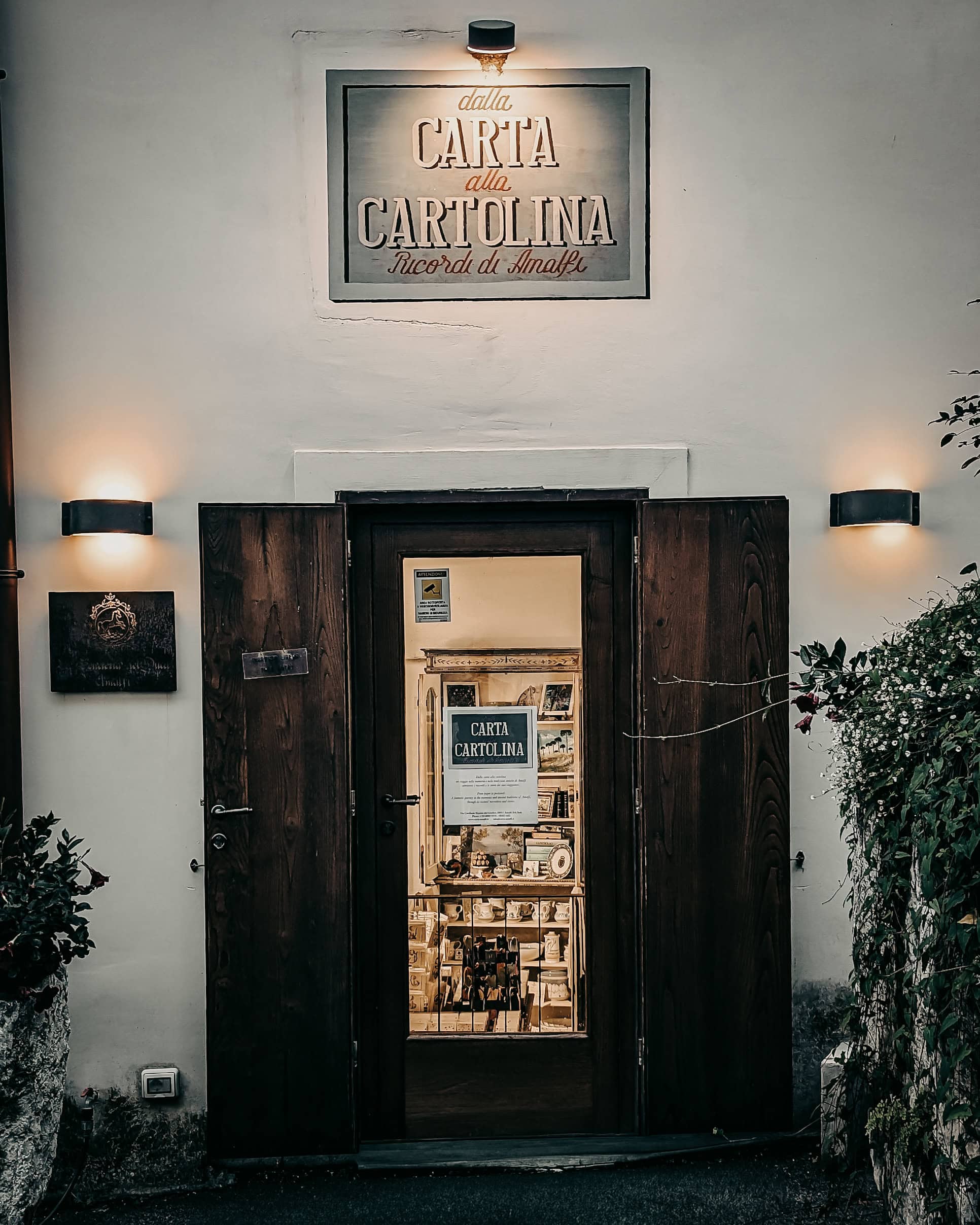
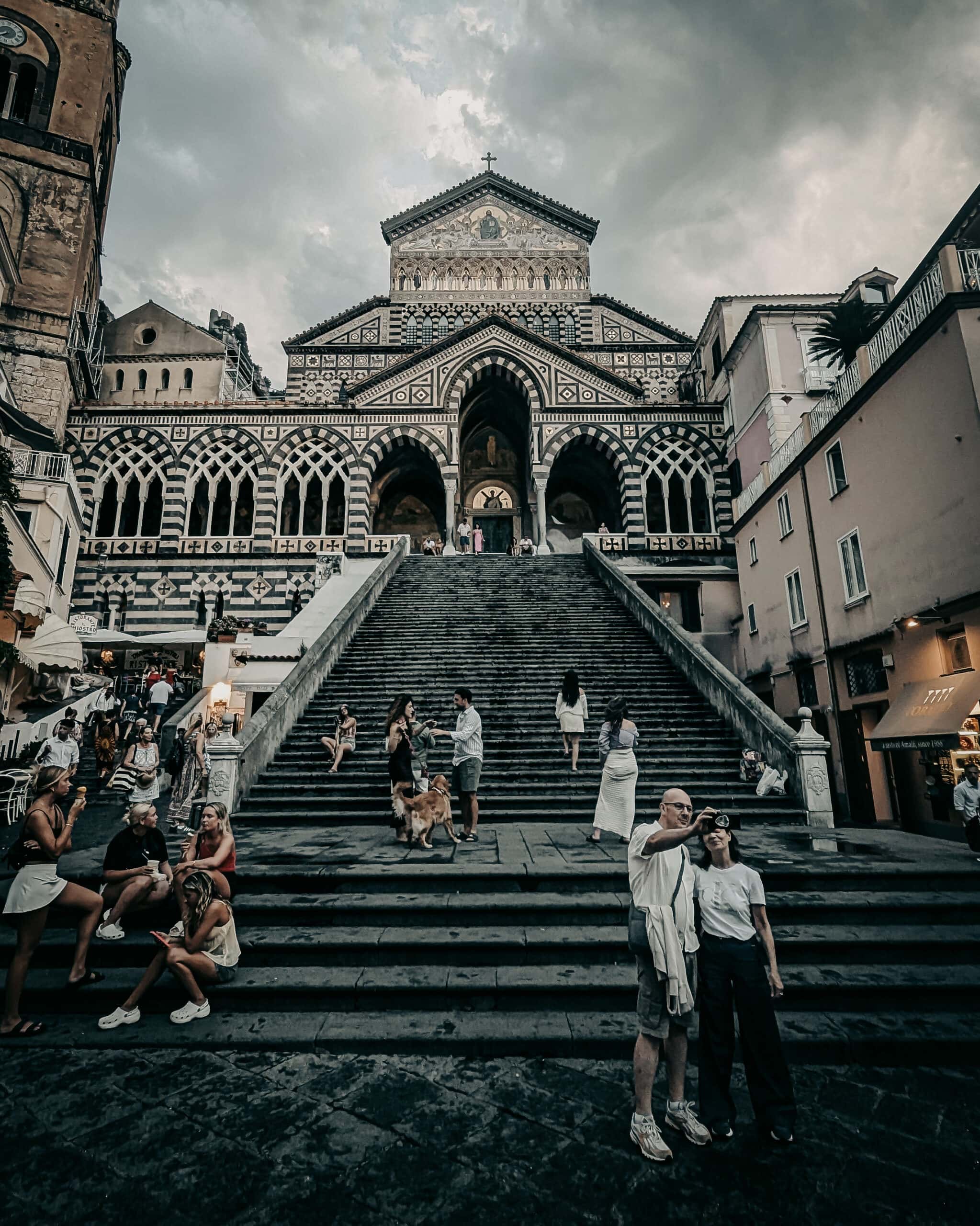
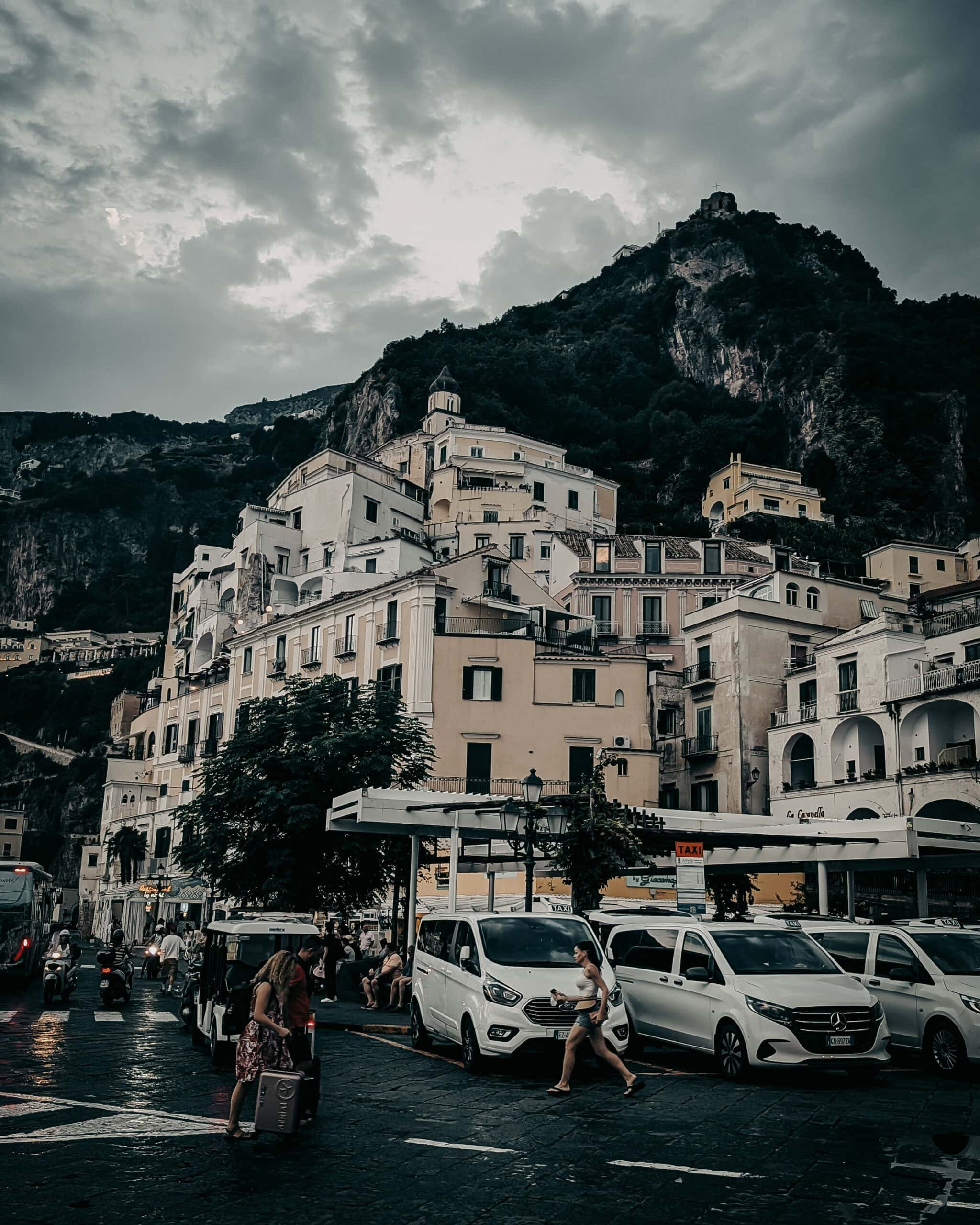
Once I felt human again, I walked back down toward the center of Amalfi and let myself get carried along by the crowds for a while, simply absorbing the atmosphere rather than trying to fight against the current. The main square in front of the Amalfi Cathedral, with its striking black-and-white striped facade and the long staircase leading up to it, was absolutely packed with people posing for photos, sitting on the steps, and generally soaking up the last of the daylight. It’s a genuinely striking piece of architecture, even glimpsed through a sea of tourists.
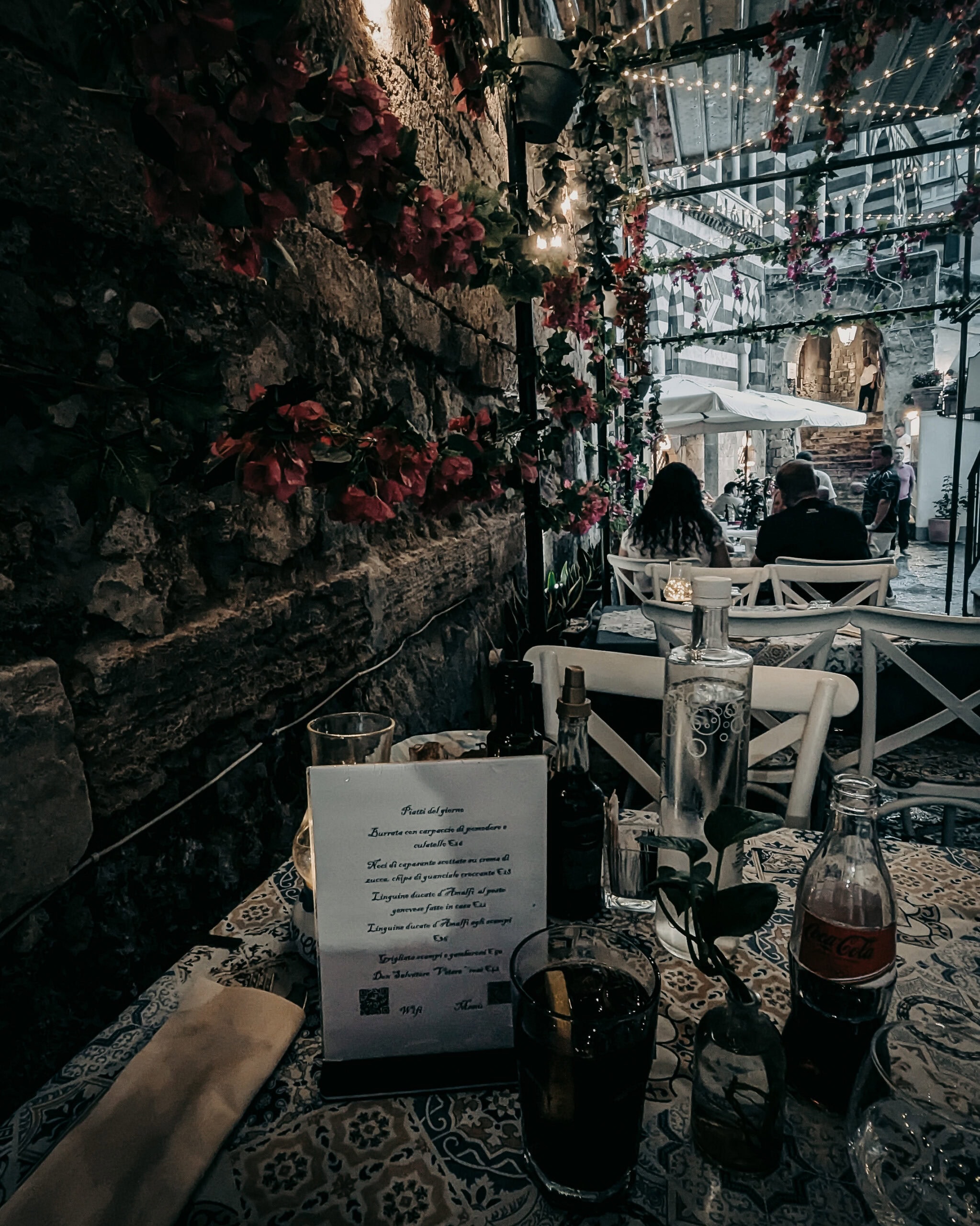
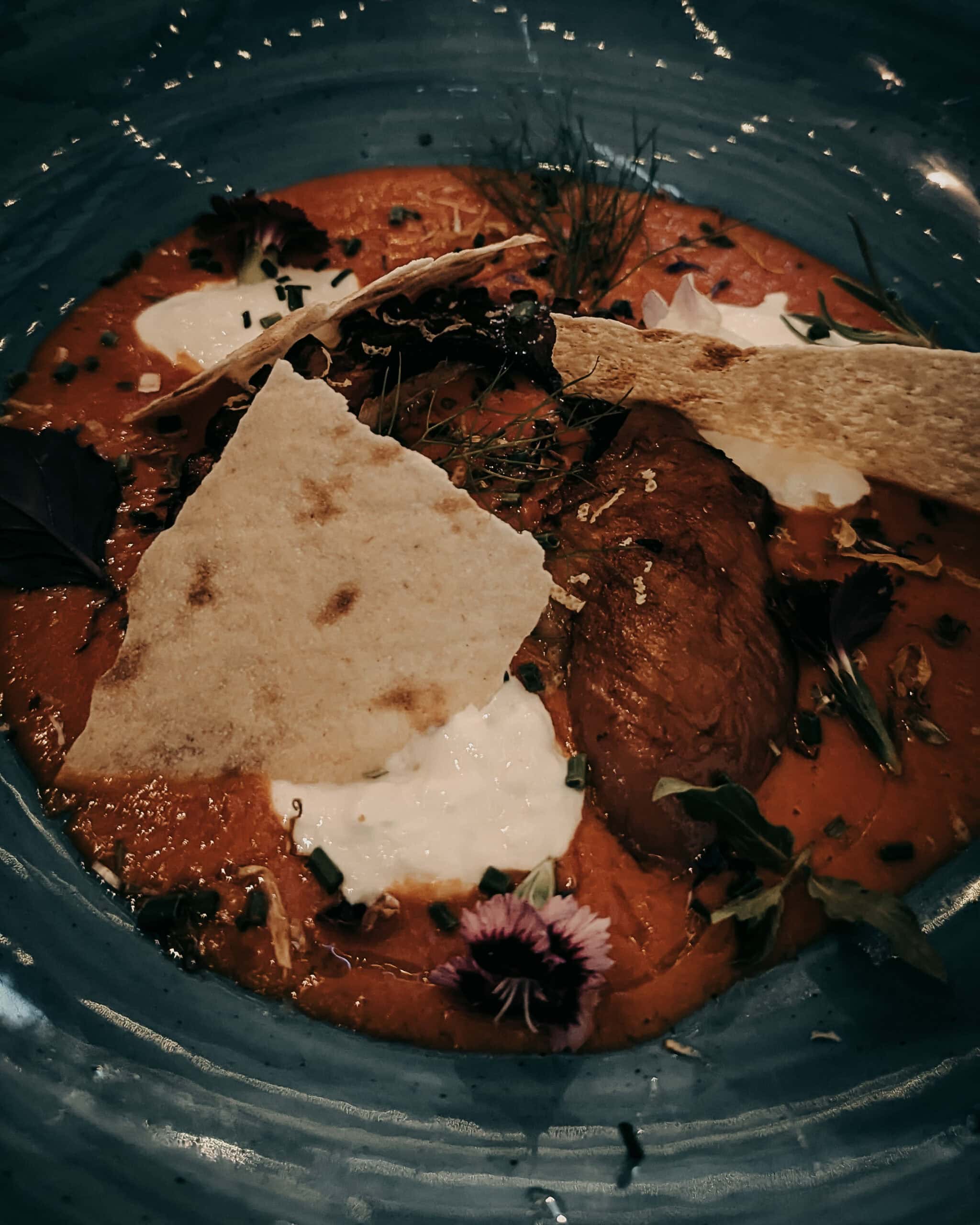
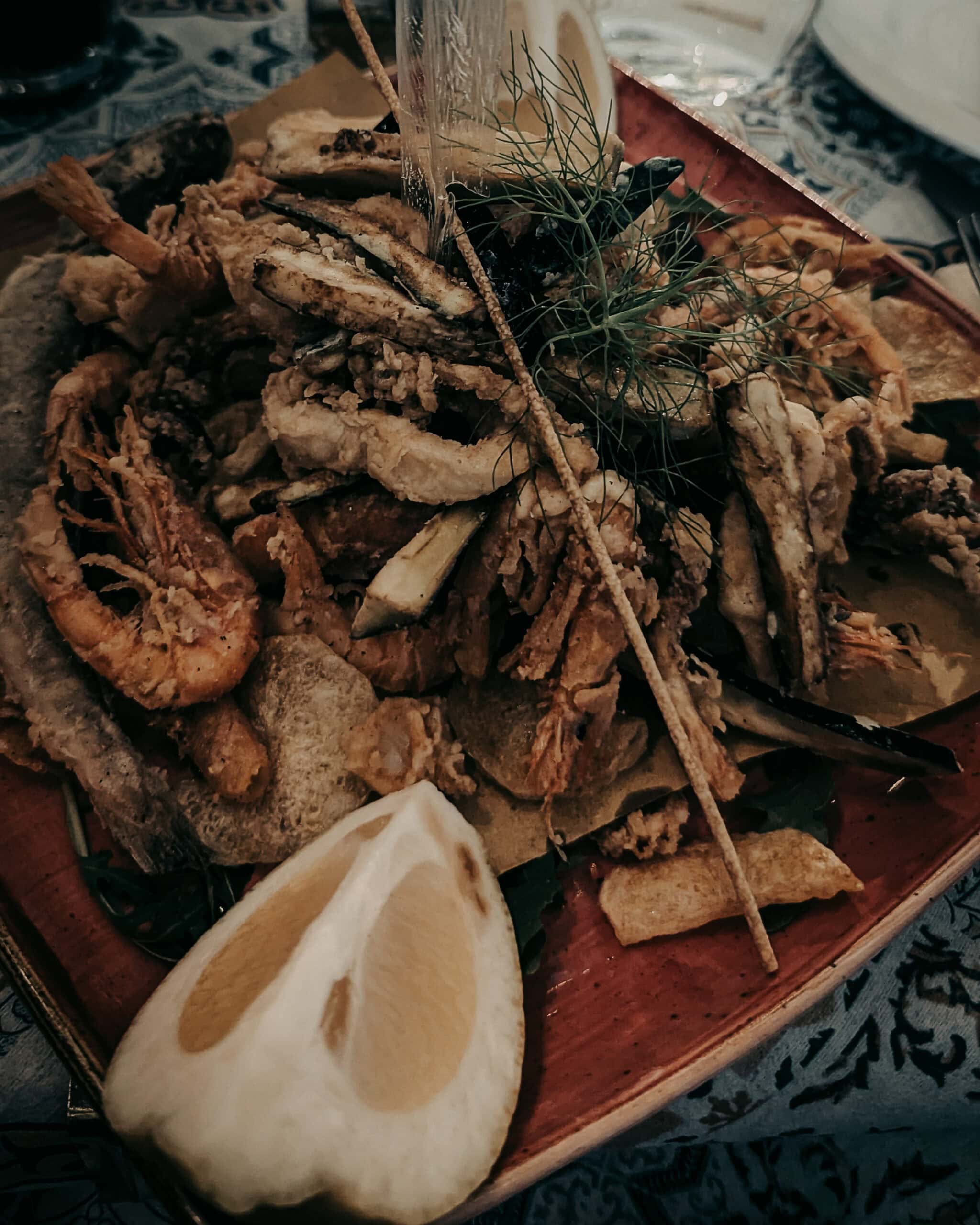
Eventually, I ducked off the main drag into one of the quieter side streets — the kind lined with old stone walls, trailing bougainvillea, and strings of warm lights overhead — and found a small restaurant tucked away from the worst of the foot traffic. Dinner turned into the highlight of the evening: a proper southern Italian seafood spread, fried whole and lightly battered, served alongside a rich, herb-flecked sauce with fresh burrata, all enjoyed at a quiet table while the noise of the crowded main street faded into the background.
A Day of Contrasts, Coast to Coast
Looking back, Day 20 was a genuine study in contrasts. It started with one of the calmest, most contemplative moments of the whole trip — a quiet sunrise over open water — and ended in one of the most crowded, chaotic tourist scenes I’d encountered since leaving home. In between, there was a long, hot highway crossing of an entire country, a small comedic crisis involving loose change and an uncooperative toll machine, a fleeting glimpse of one of history’s most infamous volcanoes, and finally, the kind of dramatic coastal scenery that photographs simply cannot do justice.
It wasn’t a spectacular day in terms of dramatic riding or remote, empty roads — if anything, it was the opposite, a day defined by highways, tolls, and tourist crowds. But it was a necessary and genuinely rewarding one all the same. Bari gave a brief, tantalizing glimpse of a city worth returning to. The crossing itself, despite the heat and the toll booth fiasco, went smoothly. And Amalfi, tourist crush aside, more than lived up to its reputation as one of the most beautiful stretches of coastline in Europe.
Sitting in that quiet side-street restaurant at the end of the day, plate of fried seafood in front of me and the sound of the crowds fading into the distance, it felt like a fitting way to close out a day that had taken me from one coast of Italy to the other — and from the calm of the open sea to the chaos of one of its most famous towns.
Looking Ahead
With Bari and the cross-country dash behind me, and the Amalfi Coast now firmly checked off the list, the next stretch of the journey would mean continuing along this legendary coastline before eventually turning north again toward home. Whatever came next, it was hard to imagine it topping a day that had already covered a sunrise, a volcano, and a scavenger hunt for toll booth change — all before dinner.