
Boarding the Ferry to Corsica
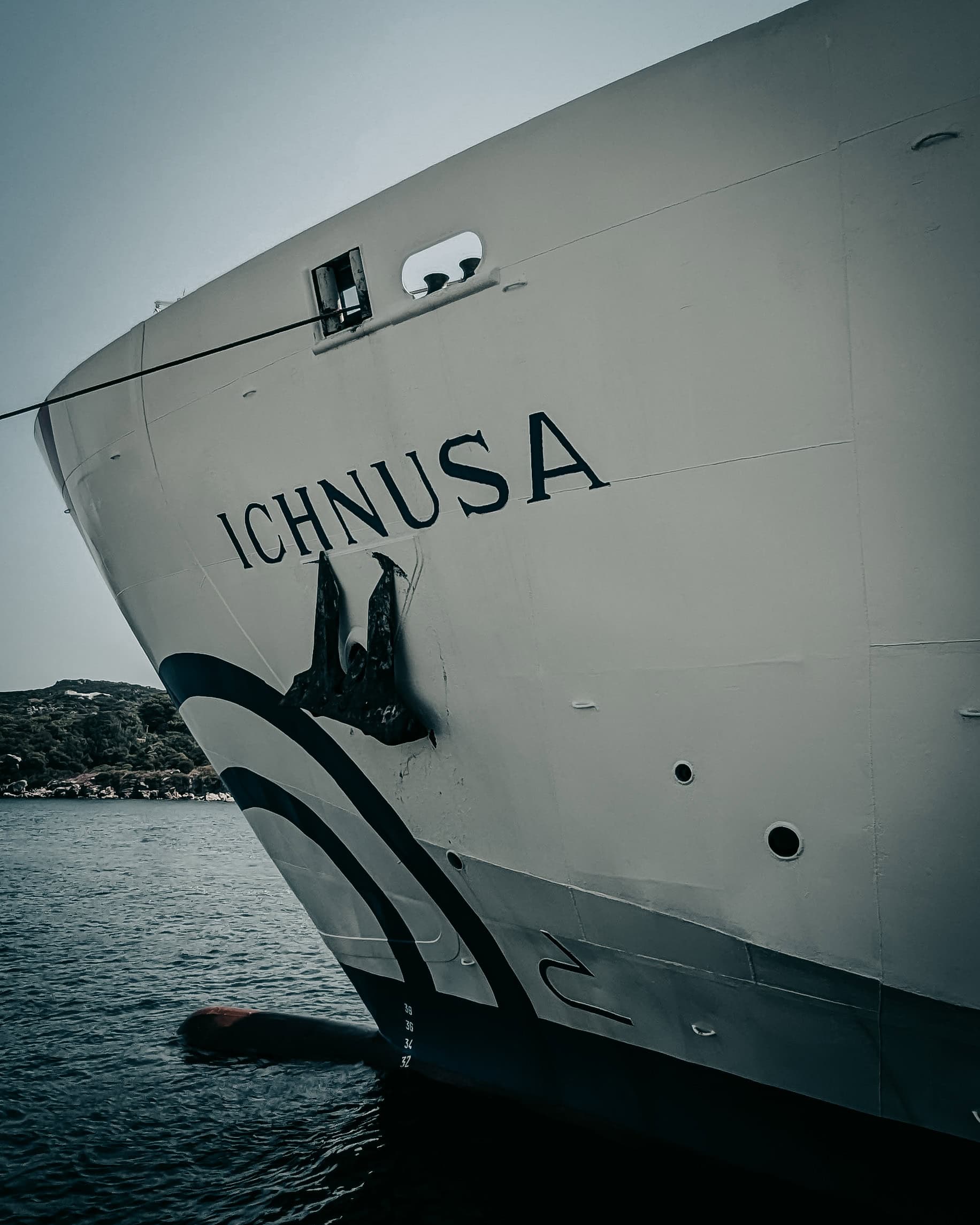
Day 26 began with a border crossing of a different kind — not a highway checkpoint, but a ferry gate. After weeks of tracing Sardinia’s coastline, mountains, and back roads, it was time to leave the island behind and point the Triumph Scrambler 1200 toward Corsica. The crossing from Santa Teresa Gallura to Bonifacio is short in distance but long in atmosphere — one of those trips where you can feel the character of a place shift before you’ve even properly arrived.
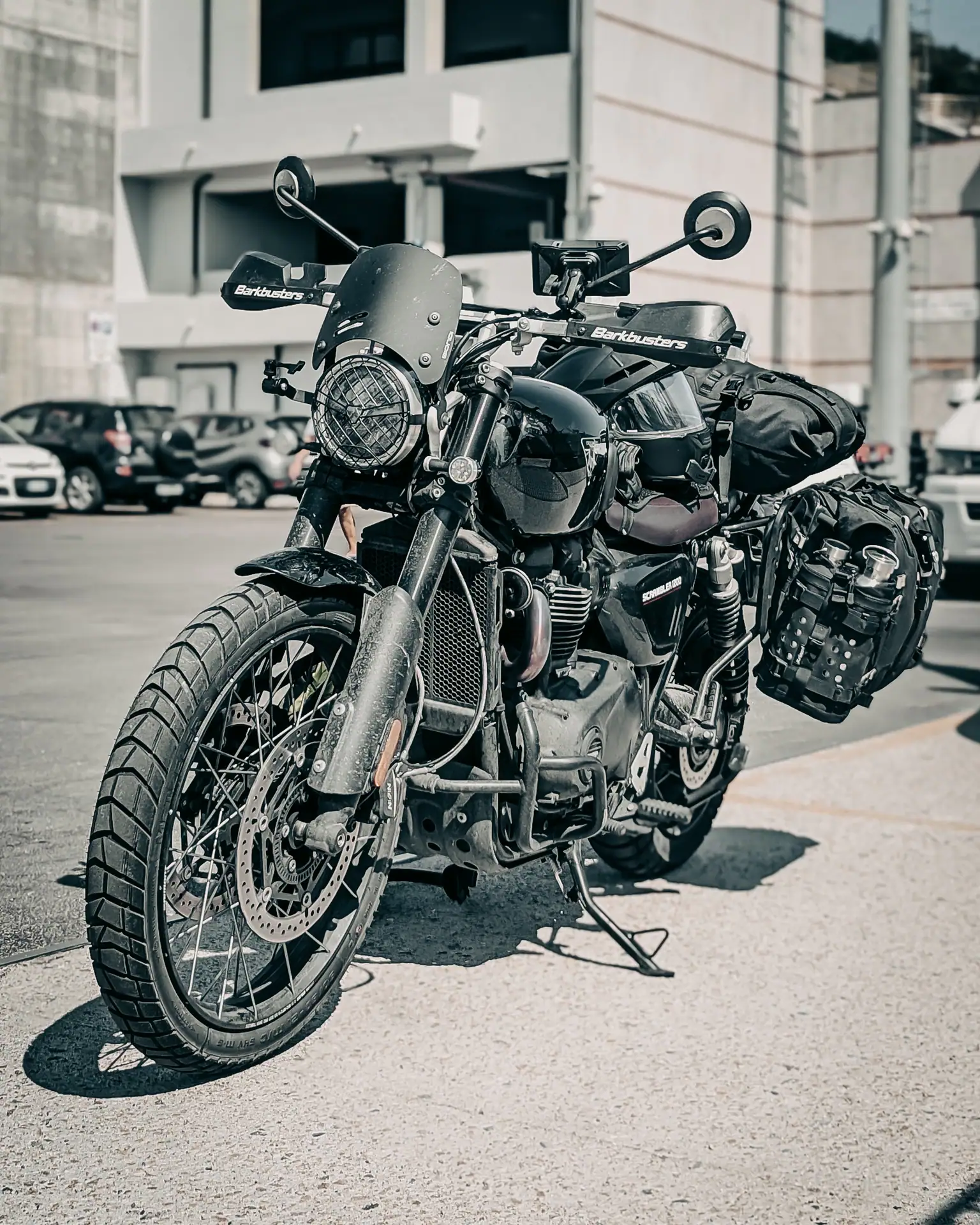
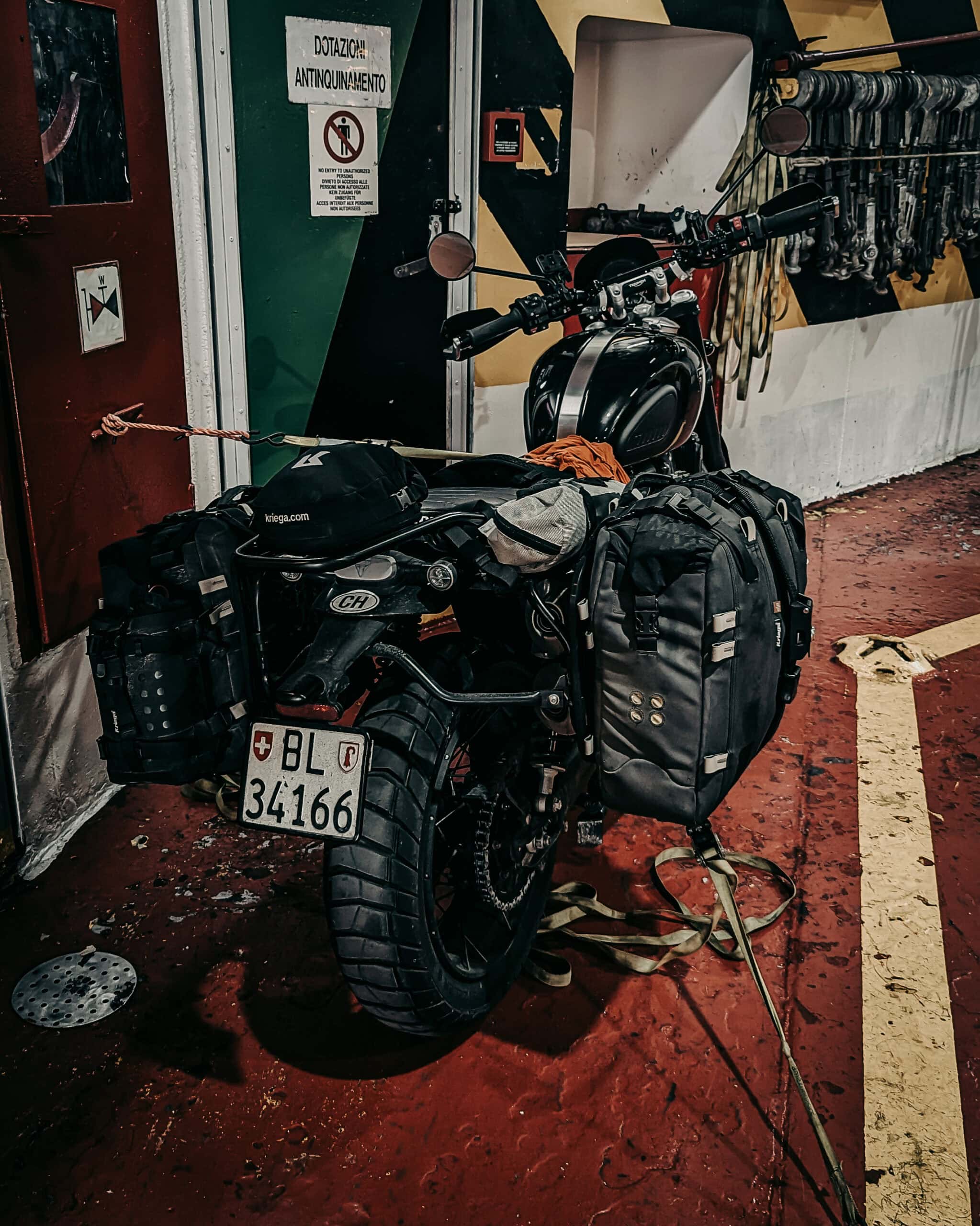
Loading a fully packed adventure bike onto a ferry always has its own small ritual. Straps get tightened, the side cases get checked one more time, and the bike gets wedged into whatever gap the deck crew points to, usually between a delivery van and someone’s family estate car. Parked among vehicles with plates from half a dozen countries, the Scrambler — Swiss plates, Kriega luggage strapped down tight, and all — looked every bit like it had earned its place on this crossing. The vehicle deck itself, with its faded warning signs, dripping condensation, and hanging tie-down straps swaying gently with the motion of the ship, is one of those unglamorous but oddly memorable parts of any road trip. It’s not scenic, but it’s real, and it’s the kind of detail that reminds you just how far this bike has already carried its rider — thousands of kilometers of Alpine passes, Balkan back roads, and Sardinian gravel tracks, all compressed into a single loaded silhouette parked between strangers’ cars.
There’s a strange calm that settles in once the bike is finally secured and the engine switched off for the crossing. No throttle to manage, no line to pick through a corner — just the low hum of the ship’s engines and the knowledge that, for the next hour or so, someone else is doing the navigating. It’s a good moment to step back and take stock of a trip that had, by this point, covered an enormous amount of ground.
Arrival in Bonifacio – A Fortress on the Rocks
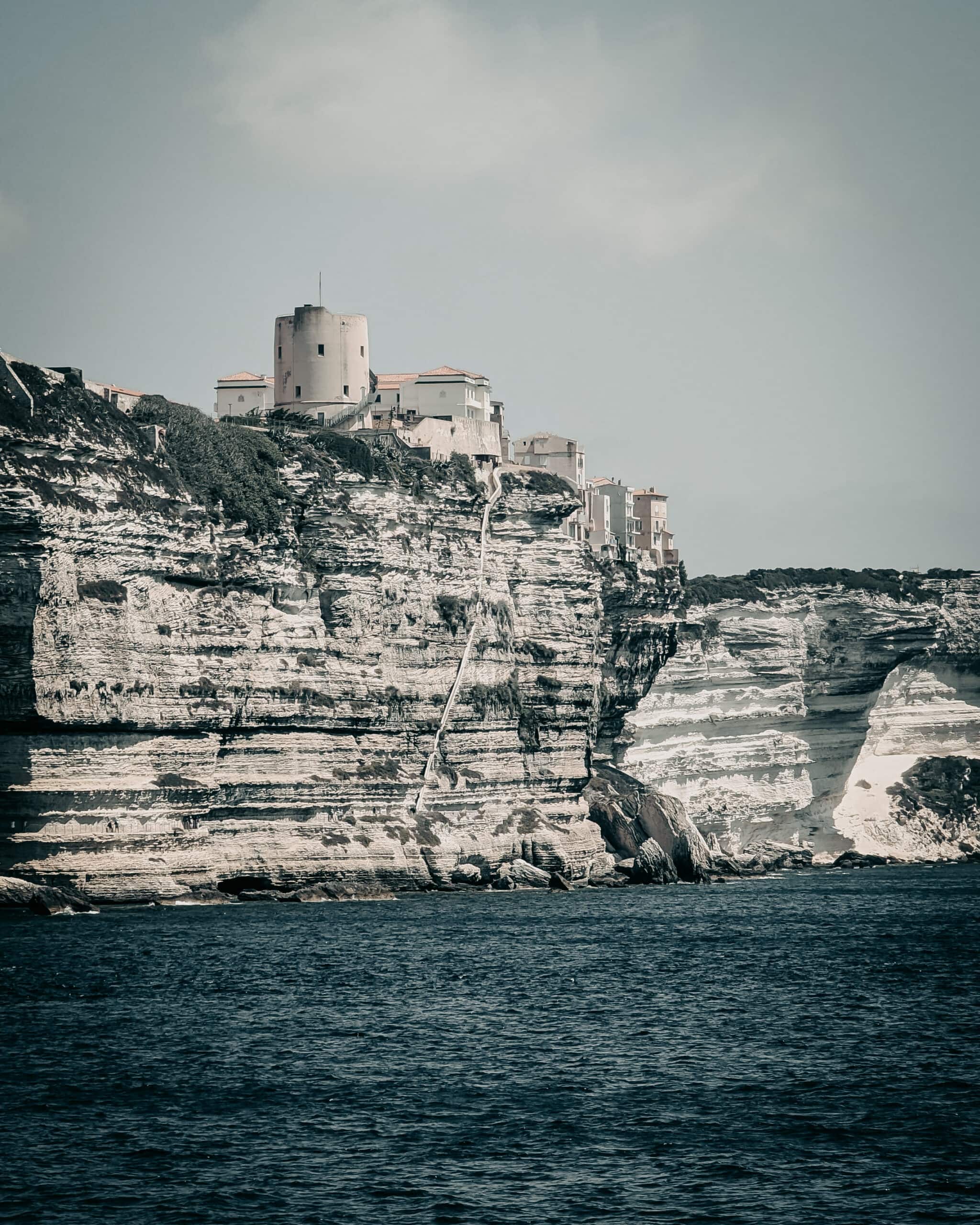
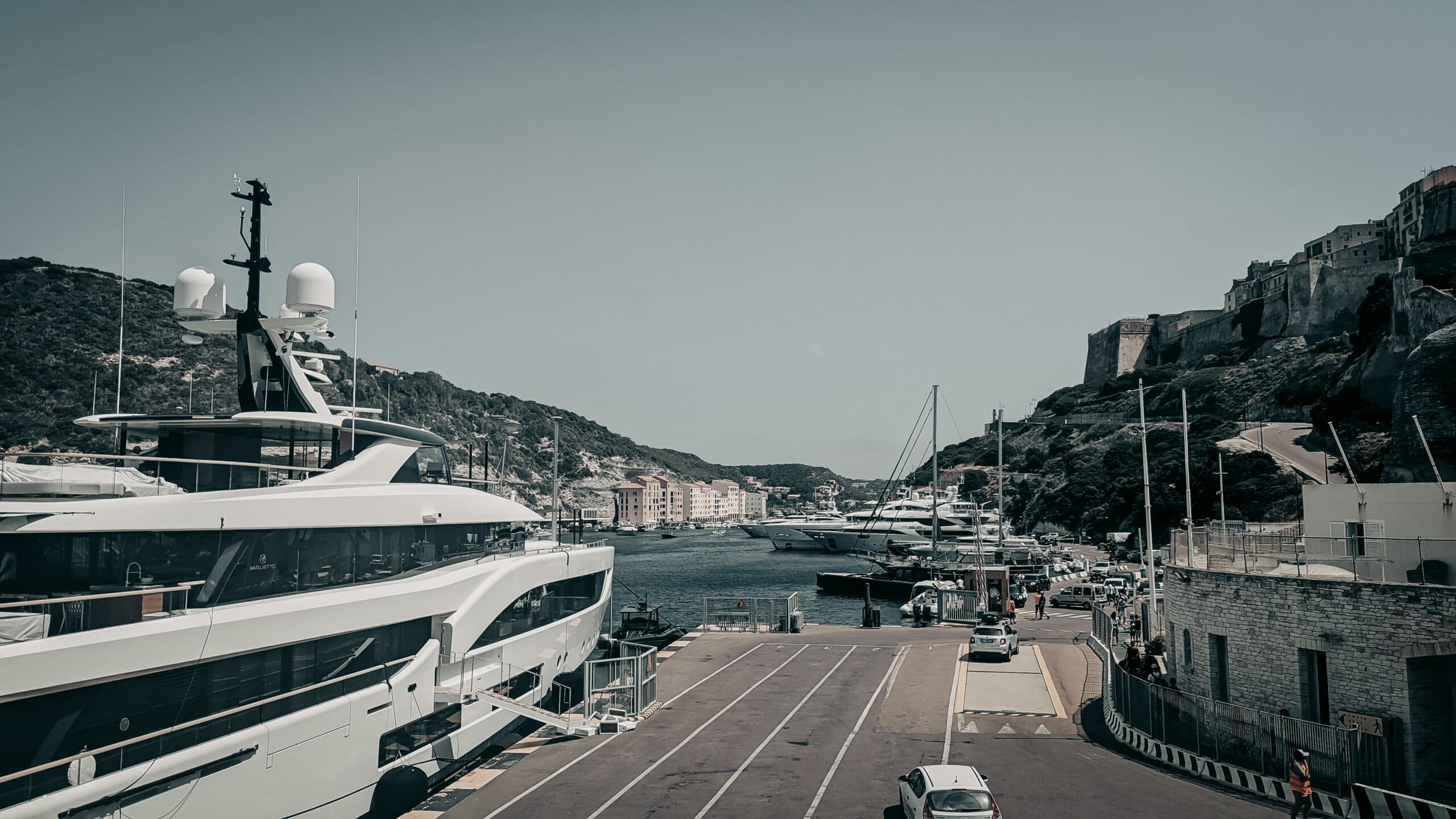
Nothing quite prepares you for the approach to Bonifacio by sea. The town sits perched on brilliant white limestone cliffs, its old citadel and watchtower rising directly above the water as if the rock itself had been carved into a fortress. Sailing into the harbor means threading through a narrow, dramatic channel — a natural harbor squeezed between towering cliff faces on either side, with sailboats and superyachts lined up along the quay below the old town.
It’s the kind of first impression that makes you reach for your phone before your feet even touch the dock. The limestone itself is striated in pale horizontal bands, layered like the pages of some enormous geological book, and the citadel above it seems to grow directly out of the rock rather than simply sitting on top of it. The contrast between the raw, wind-carved cliffs and the polished white hulls of the yachts moored beneath them says a lot about what kind of place Bonifacio is — equal parts ancient fortress town and modern playground for the well-off.
Watching the ferry glide slowly through that channel, flanked by cliffs on both sides, gave a real sense of scale that photographs never quite manage to capture. Somewhere up on those cliffs, generations of Corsicans and, before them, Genoese settlers built and rebuilt a defensive stronghold that has weathered sieges, storms, and centuries of Mediterranean history. Arriving by motorcycle, wedged among cars on a car deck, felt like a strange but fitting way to slip into a story that old.
Moving On – Corsica’s Parking Reality
The postcard moment didn’t last long once the bike rolled off the ramp. Within minutes of disembarking, harbor staff were waving traffic — including two wheels — out of the old town center. Bonifacio’s charm comes at a practical cost: parking space inside the citadel and along the harbor is extremely limited, and this wasn’t exactly a surprise. It had already come up in research done before the crossing, but seeing it in person made the constraint much more concrete. There’s simply no room for casual browsing on a loaded touring bike in a town built for pedestrians and narrow medieval streets that were never designed with cars, let alone panniers, in mind.
So instead of lingering, the plan shifted quickly from “explore Bonifacio on foot” to “find the way out before getting stuck in a one-way maze designed eight hundred years ago.” It’s a small reminder that these trips are rarely as scripted as they look in hindsight — sometimes the itinerary gets rewritten in real time, standing on a dock with a helmet still in hand, engine ticking as it cools, trying to figure out which narrow street actually leads back toward the main road rather than deeper into the old town.
A quick pass along the harborfront was still possible before pulling out — enough to appreciate the yachts, the cliffs rising directly behind the marina, and the general buzz of a town clearly built for tourism at a scale well beyond what its narrow footprint would suggest. But a proper, unhurried exploration of Bonifacio’s citadel would have to wait for a different kind of trip, one without side cases and a next destination still to be found.
Porto Vecchio and the Price of Exclusivity
Before ever setting foot on Corsican soil, a bit of homework had already been done on Booking.com, scouting out Porto Vecchio as a potential overnight stop. The town itself looked genuinely beautiful in photos — old town charm, a marina, a reputation as one of Corsica’s more fashionable coastal spots, popular with sailing crowds and mainland French holidaymakers alike. The accommodation prices, though, told a different story. Even modest-looking rooms carried price tags that felt completely out of step with what the same money would buy back in Sardinia, where a similar budget had comfortably covered small hotels with sea views and breakfast included.
That gap turned out to be an early preview of a theme that would define the rest of the day: Corsica, at least along this stretch of coast, runs in a noticeably higher price bracket than its Italian neighbor. Same sea, same general latitude, barely ten kilometers of water between the two islands, yet a completely different economic universe once you start pricing out a bed for the night. Porto Vecchio was crossed off the list without ever being visited in person, and the search for a place to sleep shifted westward along the coast, toward whatever might turn up along the way.
Into the Interior – A Riders’ Road
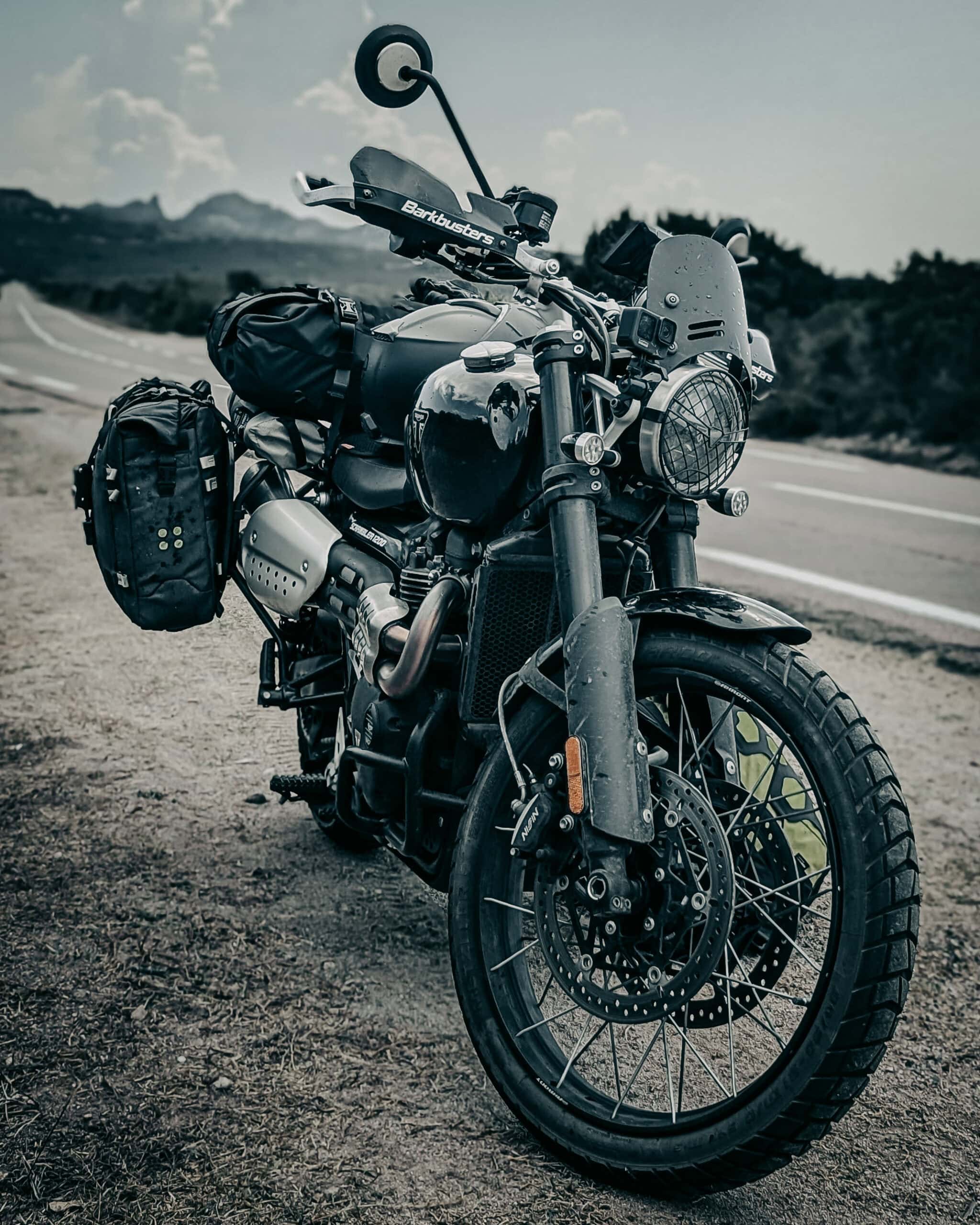
From Bonifacio, the route turned away from the coast and cut inland, tracing a path toward Portigliolo further up the western shoreline. This is where Corsica started to earn its reputation among motorcyclists. The road twisted through the island’s interior in a long series of curves — tight enough to demand focus, flowing enough to reward it, with just enough elevation change to keep things interesting through every gear. It’s the kind of stretch where the bike, the road, and the rider all seem to fall into rhythm together, corner after corner, without a single straight long enough to get bored on.
It clearly wasn’t a secret. Plenty of other riders were out on the same roads, visible in twos and threes at every scenic pull-off and hairpin, clearly drawn by the same reputation that had pulled the Scrambler off the coastal highway and into these hills. Corsica has a long-standing name in the European motorcycling community as one of the continent’s great riding islands, and this single stretch of interior road went a long way toward explaining why. Small stone villages appeared and disappeared around bends, perched on hillsides with the kind of weathered, centuries-old architecture that Corsica’s interior towns are known for — bell towers poking above terracotta rooftops, narrow lanes climbing steeply between stone houses, occasional glimpses of laundry hung out to dry between buildings that looked like they’d stood for half a millennium. It felt worlds away from the coastal glamour of Bonifacio just an hour earlier, a reminder of how much variety a single island this size can pack into a single afternoon’s ride.
There was a particular satisfaction in riding this kind of road fully loaded — panniers and roll bag adding a bit of extra mass through the corners, forcing a slightly more deliberate line than an unloaded bike would need. It’s a different kind of riding than a quick blast on a stripped-down machine: heavier, more measured, but arguably more rewarding when the rhythm clicks into place and the bike carves through switchback after switchback without complaint.
Corsica vs Sardinia – A Landscape Transformed
One of the most striking parts of Day 26 wasn’t a single viewpoint or landmark — it was the cumulative realization of just how different Corsica looks from Sardinia, despite the two islands sitting almost within sight of each other across the Strait of Bonifacio. Sardinia, especially in the areas covered over the previous days, leaned toward the arid and steppe-like: sun-bleached, sparse, granite-strewn, dotted with low scrub and the occasional donkey wandering along a mountain road. Corsica, by contrast, revealed itself as lush and densely green, its interior hillsides thick with vegetation, its mountains wrapped in forest rather than scrub.
It’s a strange thing to process while riding — two islands separated by roughly ten kilometers of open water, geologically part of the same ancient landmass, formed from similar granite bedrock, yet looking like they belong to entirely different climate zones. Corsica’s greenery gave the roads a completely different feeling: shadier, cooler, more enclosed by nature pressing in from both sides, compared to the wide-open, sun-scorched vistas that had become familiar throughout the Sardinian leg of the trip. Riding beneath a canopy of trees after weeks of exposed, sun-baked roads felt almost like stepping into a different season, even though barely an hour separated the two islands by ferry.
It’s easy to assume that neighboring Mediterranean islands would share a similar look and feel, and this stretch of Corsica was a good lesson in why that assumption doesn’t always hold. Rainfall patterns, mountain height, and prevailing winds can carve out wildly different ecosystems even across short distances — and Corsica’s interior, green and shaded, stood as living proof of exactly that.
Weather on the Horizon
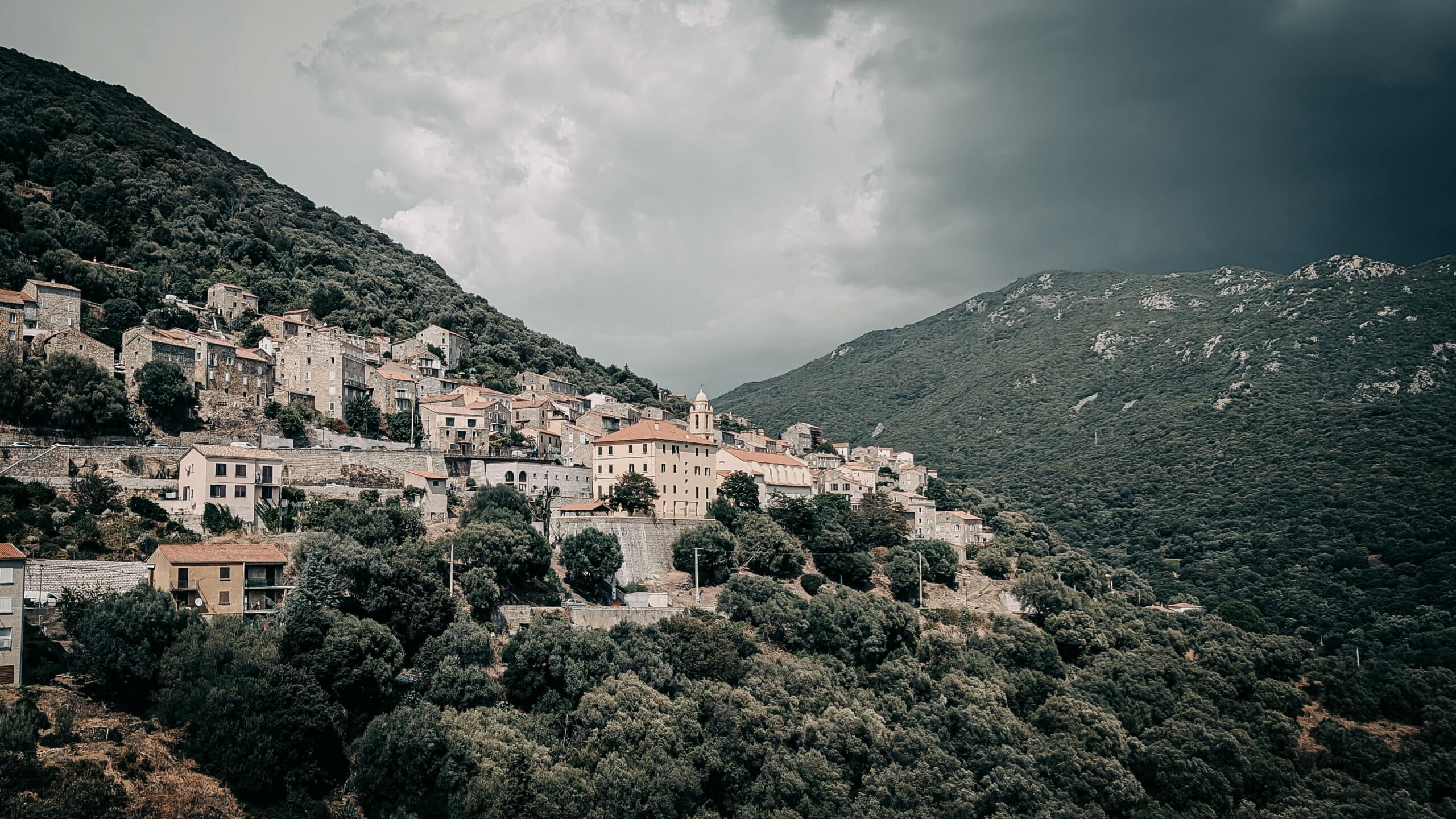
As the afternoon wore on, a storm system began building visibly to one side of the route — the kind of heavy, dark cloud formation that usually means a soaking is imminent for anyone caught underneath it. Corsica’s mountainous interior, though, did what it apparently does best: it intercepted the weather before it could reach the coastal road being ridden. The storm brewed and rumbled somewhere over the high ground, dark clouds piling up against the peaks, but not a single drop of rain made it down to the pavement along the route being followed.
This wasn’t the first time on this trip that mountainous terrain had acted as an unplanned rain shield — the same pattern had played out on previous days as well, almost as if the mountains had developed a habit of taking one for the team. There’s something almost reassuring about watching a serious-looking storm build on the horizon, checking the sky every few minutes through the visor, and simply riding on, dry, while the mountains do the work of absorbing it a valley or two away.
Portigliolo – A Hidden Gem
The day’s destination turned out to be one of those unplanned discoveries that road trips are made of. Portigliolo, a small coastal spot on Corsica’s western shore, hadn’t been part of any original plan — it emerged as the practical answer to Porto Vecchio’s price problem, found simply by continuing along the coast until something workable appeared on the map and in the booking apps.
What turned up exceeded expectations. A small, beautifully kept hotel sat almost directly across from the beach, with everything — restaurants, the shoreline, basic amenities — within easy walking distance, no need to fire the bike back up once the panniers were unstrapped for the night. The kind of low-key perfection that doesn’t need a five-star rating to feel special: clean, quiet, well-run, and blessed with a location that put the sea within view from practically the front door.
As evening settled in, the beach delivered a proper reward for the day’s ride — small boats and jet skis bobbing gently at anchor in the shallow water, the sky sliding through shades of orange and dusty blue behind the silhouette of distant hills across the bay, and a lone figure sitting quietly on the sand watching it all unfold. Boots off, riding gear finally shed for the day, there’s a particular kind of satisfaction in ending a long stretch of interior mountain roads with feet in the sand and a view like that stretching out toward the horizon. It’s the kind of moment that makes every hour spent navigating parking restrictions and inflated hotel prices feel entirely worth it.
French Corsica, French Prices
Portigliolo confirmed what Porto Vecchio’s price tags had already hinted at: this corner of Corsica runs distinctly more expensive than Sardinia, and it comes with a different clientele to match. Where the Sardinian stops had felt predominantly Italian, the crowd here skewed heavily French — hardly surprising, given Corsica’s status as a French territory and its popularity as a domestic holiday destination for mainland France, close enough for a long weekend and far enough to feel like a genuine escape.
The overall feel was, in a word, more exclusive. Higher prices, a slightly more polished tourist infrastructure, and a noticeably different holiday culture than the more rustic, budget-friendly stretches of Sardinia visited over the preceding days. That said, none of it came at the expense of quality — the beach and its surroundings in Portigliolo were spotless, well-maintained, and genuinely pleasant, even if the euro-per-night math looked a little different than it had back on the neighboring island. It’s a trade-off worth noting for anyone plotting a similar route: budget accordingly once Corsica enters the itinerary, because the value equation shifts noticeably the moment the ferry docks.
Reflections on Day 26
Day 26 turned into one of those transition days that end up defining a trip’s rhythm — a ferry crossing, a change of country, and an entirely new landscape and price structure to adjust to, all within a matter of hours. From the dramatic cliff-top arrival in Bonifacio to the sudden need to navigate its parking limitations, from a rejected overnight stop in Porto Vecchio to a lucky discovery in Portigliolo, the day was a lesson in staying flexible when a trip crosses from one world into another — a reminder that some of the best stops on a long road trip are never the ones planned weeks in advance, but the ones stumbled into after the original plan falls through.
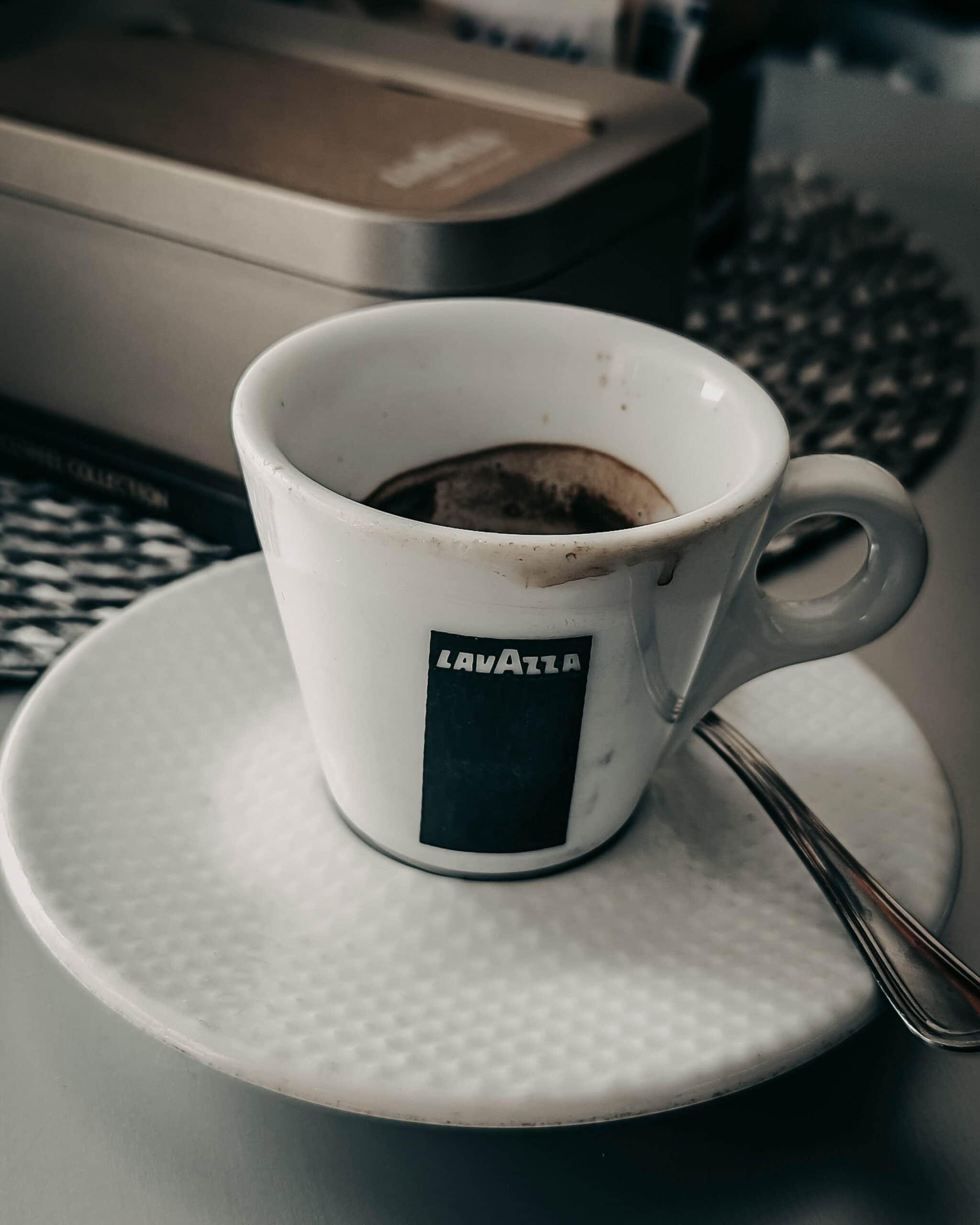
The riding itself, through Corsica’s green, curving interior, was a highlight in its own right — proof that this island’s reputation among motorcyclists is thoroughly earned, and a strong argument for anyone planning their own Mediterranean island-hopping route by bike to give Corsica’s back roads more than just a passing glance. And the closing scene, watching the sun go down over a quiet French-Corsican beach after a long day in the saddle, was the kind of reward that makes every mile of a road trip worth it. Tomorrow, the route continues along Corsica’s coast — but for now, Portigliolo’s calm shoreline and a strong espresso, the kind of small ritual that had accompanied nearly every morning and evening of this trip, were more than enough to close out the day.